The industrial laundry industry in Vietnam continues to grow as hotels, hospitals, restaurants, factories and service providers increasingly require professional solutions for processing large volumes of clothing, linens, towels and textile products. Choosing the right laundry model plays an important role in optimizing capacity, controlling costs and improving operational efficiency. This article introduces common industrial laundry models and the key factors businesses should consider before investing.
What Is an Industrial Laundry Model?
An industrial laundry model is a system of equipment, processes and operating methods designed to handle large volumes of textiles. Depending on operational requirements, a laundry system may include industrial washing machines, tumble dryers, ironing equipment, textile finishing equipment and specialized laundry chemicals.
Unlike small-scale laundry operations, industrial laundry requires coordination between equipment capacity, facility layout, labor, water supply, electricity or fuel and operating procedures. A properly designed model helps businesses process laundry consistently, reduce waiting time and improve service capacity.
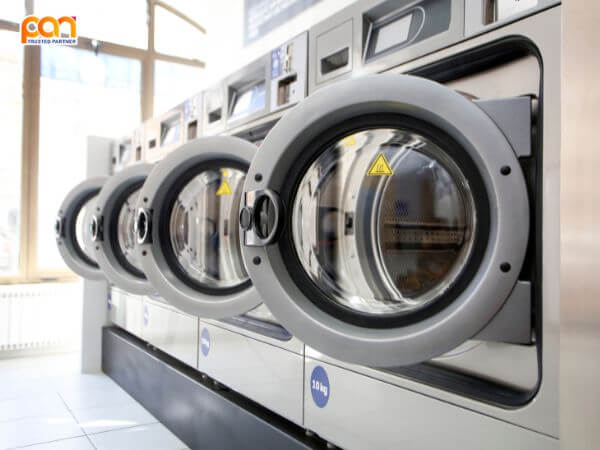
Common Industrial Laundry Models
Depending on processing capacity, target customers and textile requirements, businesses can choose from several industrial laundry models. Common options include:
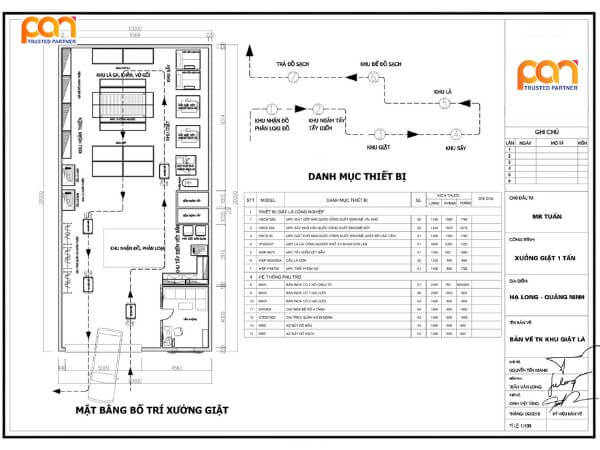
Industrial Laundry Plant with a Capacity of Approximately 1 Ton per Day
A laundry plant with a capacity of approximately 1 ton per day is suitable for medium-scale operations such as hospitals, hotels, restaurants or laundry service providers serving nearby customers.
At this scale, businesses need to determine the appropriate number of washing machines, dryers and finishing equipment to ensure that actual daily capacity meets operational demand. A laundry system designed for Ha Long Hospital is an example of equipment planning based on the specific requirements of a healthcare environment.
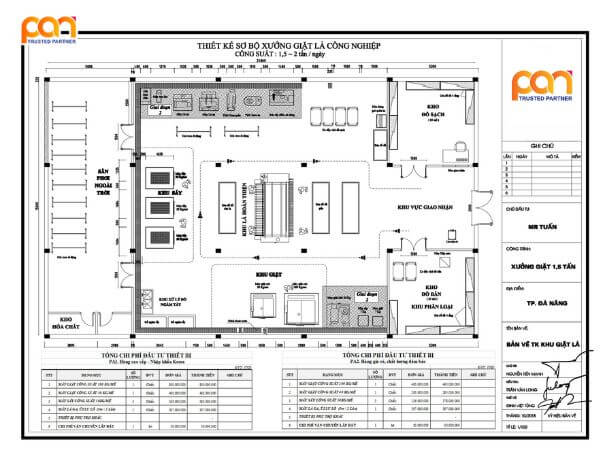
Industrial Laundry Plant with a Capacity of 1.5–2 Tons per Day
A laundry model with a capacity of 1.5 to 2 tons per day is suitable for businesses with stable laundry volumes and multiple customer groups. It can serve hotels, restaurants, hospitals, resorts and organizations that outsource their laundry operations.
At this scale, the layout of receiving, washing, drying, ironing and textile finishing areas should be considered during the design stage. A laundry plant developed for an investor in Da Nang is an example of a system suitable for this capacity range.
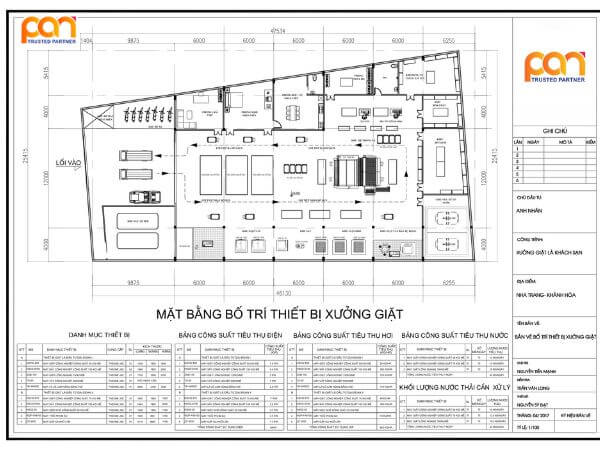
Industrial Laundry Plant with a Capacity of 2.5–3 Tons per Day
A laundry plant with a capacity of 2.5 to 3 tons per day is suitable for hotels, resorts, hospitals or professional laundry service providers handling large textile volumes.
Businesses should prioritize equipment with suitable capacity, reliable continuous operation and clearly defined laundry workflows. An integrated system helps reduce waiting time between processing stages and improves overall plant efficiency.
A laundry model designed for a hotel in Nha Trang City, Khanh Hoa Province, is an example of a solution that can be considered when developing laundry operations for the hospitality industry.
Traditional Wash-and-Dry Model
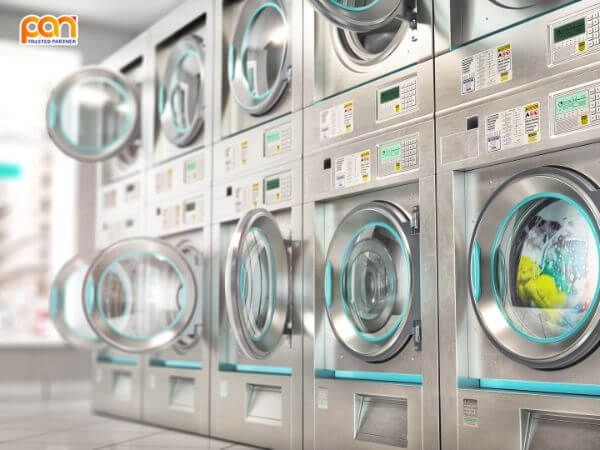
The wash-and-dry model combines washing and drying into a continuous textile processing workflow. It is commonly used by laundry facilities that handle large volumes of clothing, linens, towels and other textile products.
This model offers a relatively straightforward workflow and can be expanded according to business needs. When designing the system, businesses should balance washing capacity, drying capacity, processing time and available floor space.

Washing and Textile Finishing Model
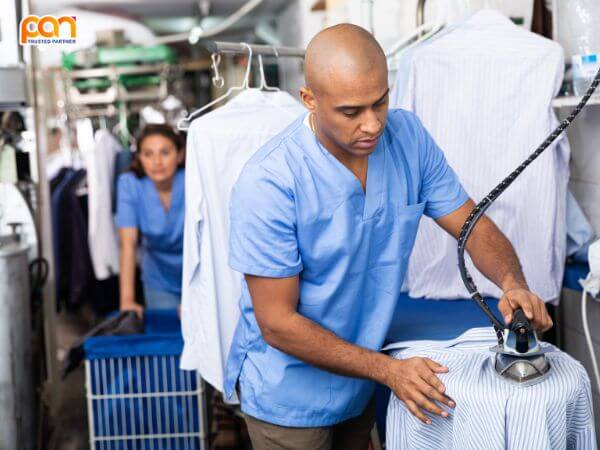
A washing and textile finishing model includes washing, drying and post-wash processes such as ironing, pressing or garment finishing. This model is suitable for hotels, restaurants, accommodation facilities and service providers that need to return clean, dry and ready-to-use textiles.
Investment costs and equipment requirements depend on textile types, processing volume and the desired level of finishing. Businesses should select equipment based on actual operational needs instead of investing in unnecessary machinery.
Dry Cleaning Model
Dry cleaning uses specialized solvents instead of water to clean certain garments and textile products. It is commonly applied to fabrics and garments requiring special care, such as suits, coats, silk, wool and selected high-end textiles.
When investing in a dry cleaning model, businesses need to consider specialized equipment, chemicals, ventilation, safety procedures and waste management requirements.
Automated Industrial Laundry Model
An automated industrial laundry model applies control technology and automation to textile processing operations. Depending on the investment level, the system may support chemical dosing, wash program selection, temperature control, time management and other operating parameters.
Automation reduces dependence on manual operations, improves consistency between wash loads and helps businesses control processes more effectively. However, operators still require proper training to monitor equipment, handle operational issues and maintain workplace safety.
Industrial Laundry Business Opportunities
Market and Growth Potential
Demand for industrial laundry services in Vietnam comes from various sectors, including hotels, restaurants, hospitals, resorts, schools, factories and accommodation facilities. The growth of tourism, hospitality and manufacturing creates a steady need for textile processing services with increasing expectations for quality and delivery time.
For businesses planning to invest in a laundry plant, identifying target customers and estimating expected laundry volumes are important steps before selecting equipment.
Suitable Customer Groups
Residential Customers
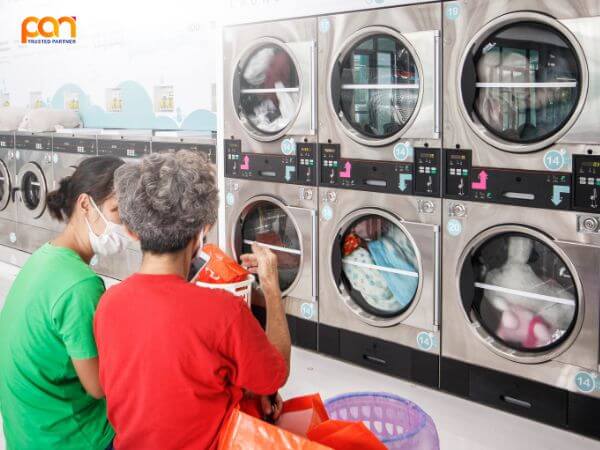
Residential laundry services meet the needs of households and local communities. Common items include clothing, blankets, bed linens, towels and other textile products requiring specialized care.
Depending on the business model, facilities may offer wet cleaning, dry cleaning, drying, ironing and other textile finishing services.
Restaurants, Hotels and Accommodation Facilities
Restaurants, hotels, resorts and guesthouses regularly require the processing of bed linens, towels, curtains and uniforms. This customer group is suitable for laundry models with stable workflows, large processing capacity and strict delivery requirements.
Hospitals, Schools, Factories and Industrial Facilities
Hospitals, schools, factories and industrial facilities often have specific laundry requirements based on their operations. Items may include uniforms, bed linens, towels, blankets and textiles used in specialized environments.
When selecting equipment for these customer groups, businesses should consider capacity, textile sorting procedures, hygiene requirements, chemical control and actual operating conditions.
What to Prepare Before Opening an Industrial Laundry Plant
- Research the market: Identify the business location, target customers, expected laundry volume and competitive landscape.
- Prepare the investment budget: Plan for equipment, facility rental, renovation, labor, chemicals and initial operating costs.
- Choose equipment and suppliers carefully: Prioritize equipment with suitable capacity, reliable origin, technical support and warranty services.
- Design the workflow: Organize receiving, sorting, washing, drying, ironing, finishing and delivery areas efficiently.
- Train employees: Provide training in equipment operation, chemical handling, textile processing and workplace safety.
- Focus on customer service: Maintain service quality, delivery schedules and effective communication to build long-term customer relationships.
How Much Does It Cost to Open an Industrial Laundry Plant?
The investment cost of an industrial laundry plant depends on processing capacity, equipment type, facility size, automation level and customer requirements. Therefore, there is no single fixed investment amount that applies to every laundry model.
Equipment Costs
Equipment usually represents a significant portion of the initial investment. A basic system may include:
- Industrial washing machines.
- Industrial tumble dryers.
- Ironing and textile finishing equipment.
- Auxiliary equipment such as form finishers, spotting tables, laundry carts and storage racks.
- Water supply, drainage, electrical, steam or fuel systems, depending on the design.
Actual costs should be determined based on required capacity and equipment configuration. Businesses should consider not only the initial purchase price but also operating costs, maintenance and future expansion potential.
Facility Costs
The facility must provide enough space for receiving, sorting, washing, drying, ironing, storage and delivery operations. In addition to rent, businesses may need to budget for flooring, electrical systems, water supply, drainage, ventilation and technical areas.
Labor Costs
Labor requirements depend on the level of automation and plant capacity. A small facility may require fewer employees, while a larger plant may need dedicated personnel for receiving, sorting, equipment operation, finishing and delivery.
Chemical and Operating Costs
- Laundry detergents and textile treatment chemicals.
- Electricity, water, steam or fuel costs.
- Maintenance, repairs and consumable replacement.
- Management, software and transportation costs when delivery services are included.
Instead of applying a general investment estimate, businesses should prepare a project-specific budget based on laundry volume, target customers and expected capacity. This provides a stronger foundation for selecting the right model and controlling financial performance over time.
Benefits of Industrial Laundry Services and Systems
Saving Time and Resources
Industrial laundry systems help process large volumes of textiles within operational time requirements. For businesses that do not want to invest in a complete in-house laundry facility, professional laundry services can reduce the burden of managing equipment, space and labor.
Improved Washing Consistency
When laundry procedures are developed according to textile types and soil levels, businesses can better control factors such as temperature, processing time, chemicals and finishing operations. This contributes to more consistent textile quality during daily operations.

Optimized Costs Based on Scale
Selecting equipment with the right capacity helps businesses avoid unnecessary investment and use resources more efficiently. A suitable model should balance current laundry volume, future expansion potential and actual operating costs.
Industrial Laundry Solutions in Hanoi and Other Areas
Hanoi, Ho Chi Minh City, Da Nang, Nha Trang and other locations with strong tourism, hospitality, healthcare and manufacturing activities have growing demand for industrial laundry services. Each market has different customer characteristics and textile volumes, so the investment model should be designed accordingly.
For businesses looking for industrial laundry equipment, conducting a needs assessment, selecting the appropriate capacity and developing an integrated workflow can improve long-term investment efficiency.
Conclusion
Choosing the right industrial laundry model is an important factor in determining operational efficiency and business growth potential. From laundry plants with a capacity of approximately 1 ton per day to systems handling 2.5–3 tons per day or more, each model should be designed according to laundry volume, target customers, facility conditions and investment budget.
If your business is planning to open a laundry plant, upgrade an existing system or find suitable industrial laundry equipment, PAN can provide consultation and solutions based on your actual operational requirements and development goals.
PAN TRADING JOINT STOCK COMPANY
📞 Hotline: (+84) 28 3840 2222 | 0919 302 879
📧 Email: contact@pantrading.vn
🌐 Website: pantrading.vn | thietbigiatcongnghiep.com