Hospital Ward Linen Handling Procedure
In healthcare environments, used textiles should be collected, sorted, and handled according to an appropriate procedure before being transported to the laundry. Proper handling at the ward level plays an important role in reducing the spread of contaminants and limiting the risk of cross-contamination during transportation and laundry processing.
Soiled linen not contaminated with blood or body fluids
For soiled linen that is not contaminated with blood or body fluids, the following practices should be observed:
- Place used linen directly into a designated linen collection trolley or container.
- Do not leave linen on stretchers.
- Do not leave soiled linen on patient beds.
- Do not shake linen inside the hospital ward.
Linen contaminated with blood or body fluids
Linen contaminated with blood or body fluids should be handled separately before being transported to the laundry. The items should be placed in suitable bags or containers and securely closed while awaiting transportation.
- Heavily contaminated linen should be packaged according to the applicable handling procedure.
- Do not leave contaminated linen on patient beds or stretchers.
- Do not leave collection bags open.
- Do not shake contaminated linen inside the ward.
- Use gloves, protective clothing, masks, and other appropriate personal protective equipment when sorting or handling linen contaminated with blood or body fluids.
Important note on handling contaminated linen
All linen contaminated with blood or body fluids should be handled according to the same safety principles, regardless of the specific medical condition of the patient.
Handling linen from patients with significant infectious diseases
For linen used by patients with infectious diseases that may present a high risk of transmission, all items should be handled according to the procedure for contaminated linen, whether or not visible blood or body fluids are present.
The linen should be collected separately, securely packaged, and appropriately identified before transportation to the laundry. Linen should never be shaken inside the ward. Personnel handling the items should use suitable personal protective equipment throughout the process.
Laundry disinfection procedure
Required equipment and materials
- Containers or equipment for disinfectant chemicals.
- Industrial washing machines.
- Industrial dryers.
- Disinfectant chemicals.
- Appropriate laundry chemicals or detergents.
Laundry process
1. Sort the linen
Linen should be sorted before washing so that suitable washing and handling procedures can be selected. Categories may include:
- Staff garments.
- Patient garments.
- Linen contaminated with blood or body fluids.
- Textiles used in surgical areas.
- Textiles sorted according to fabric type.
2. Wash using an appropriate programme
After sorting, the linen is loaded into the washing machine together with the required laundry and treatment chemicals according to the applicable procedure.
The washing programme should be selected or configured according to the level of contamination, treatment requirements, and characteristics of each type of textile.
3. Dry the linen
After the washing cycle is completed, the linen is transferred to the drying stage or another appropriate processing stage, depending on the type of textile and its intended use.
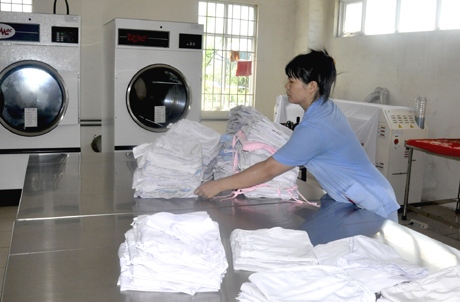
4. Finish, fold, and package
After drying, textiles may be ironed, flatwork finished, or folded depending on the type of linen. The finished textiles are then packaged and stored under appropriate conditions before being returned to the hospital wards.
5. Return clean linen for use
Once the process is completed, clean linen is distributed back to hospital wards according to operational requirements and the hospital's linen management procedure.
PAN TRADING JSC
📞 Hotline: (+84) 28 3840 2222 | 0919 302 879
📧 Email: contact@pantrading.vn
🌐 Website: pantrading.vn | thietbigiatcongnhiep.com