In today's modern households and business operations, washing machines have become essential equipment. However, the amount of electricity consumed each month remains a concern for many users. Understanding the machine's rated power, operating time, and usage frequency can help estimate electricity costs, manage expenses, and improve operating efficiency.
Improper use can also increase energy consumption, reduce washing performance, and affect equipment service life. So, how much electricity does a washing machine use per month? Let's explore how to calculate electricity consumption and the common mistakes that should be avoided.
How Much Electricity Does a Washing Machine Use Per Month?
The monthly electricity cost of a washing machine depends on several factors, including equipment power, number of washing cycles, operating time per cycle, and electricity rates. Therefore, there is no single fixed cost applicable to every washing machine.
To estimate electricity consumption, you need to identify the following information:
- Washing machine power: Usually shown on the equipment label or in the operating manual. Power may be expressed in Watts (W) or Kilowatts (kW).
- Number of uses per month: Determine the average number of washing cycles performed each week or month.
- Operating time: Estimate the average duration of each washing cycle.
- Electricity rate: The applicable price per Kilowatt-hour (kWh) for the relevant location or customer category.
For example, a washing machine rated at 500W is equivalent to 0.5kW. If it is used 28 times per month and operates for an average of one hour per cycle, its electricity consumption can be estimated based on the rated power and actual operating time.
How to Calculate Monthly Electricity Consumption
The basic formula for calculating washing machine electricity consumption is:
Electricity Consumption (kWh) = Power (kW) × Operating Time (hours) × Number of Uses
To calculate the electricity cost, use the following formula:
Electricity Cost = Electricity Consumption (kWh) × Electricity Rate (VND/kWh)
Example Calculation
Assume the washing machine has the following specifications:
- Rated power: 0.5kW.
- Average operating time: 1 hour per cycle.
- Number of uses: 28 cycles per month.
- Assumed electricity rate: VND 2,500/kWh.
Electricity consumption per cycle:
0.5kW × 1 hour = 0.5kWh
Monthly electricity consumption:
0.5kWh × 28 cycles = 14kWh
Estimated monthly electricity cost:
14kWh × VND 2,500/kWh = VND 35,000
This is only an illustrative example based on assumed power and operating conditions. Actual electricity costs may vary depending on the machine type, selected washing programme, water temperature, usage frequency, and applicable electricity rates.
Common Mistakes That Cause Higher Washing Machine Energy Consumption
Improper use of a washing machine can increase electricity costs and affect equipment performance and service life. The following are common mistakes to avoid.
1. Overloading the Washing Machine
Loading too much laundry forces the motor and drive system to operate under heavier loads than recommended. This may reduce washing performance, extend operating time, and increase the risk of equipment damage.
Sort and divide laundry into suitable loads instead of trying to wash excessive quantities in a single cycle.
2. Washing Very Small Loads Too Frequently
Running the machine repeatedly with very small loads can also waste electricity and water. Use the equipment with a practical load size that matches its rated capacity without exceeding the recommended maximum.
3. Selecting an Unsuitable Washing Programme
Using long or intensive programmes for lightly soiled laundry can increase operating time and electricity consumption. Conversely, selecting a programme that is too short for heavily soiled laundry may require the clothes to be washed again.
Select the programme based on fabric type, soil level, laundry volume, and actual cleaning requirements.
4. Neglecting Regular Cleaning and Maintenance
Accumulated dirt, lint, detergent residue, and dust can affect washing machine performance. Components such as filters, detergent drawers, drainage systems, and drive mechanisms should be inspected and cleaned regularly.
Proper maintenance helps equipment operate more consistently and reduces unnecessary energy consumption caused by inefficient operation or excessive mechanical load.
5. Leaving the Washing Machine in Standby Mode for Long Periods
Some equipment may continue to consume a small amount of electricity while in standby mode. If the machine will not be used for an extended period, turn it off according to the manufacturer's instructions and disconnect the power supply when appropriate.
6. Using Excessive Detergent
Using too much detergent or an unsuitable detergent can create excessive foam and require additional rinsing stages to remove residue. This may increase water consumption and operating time.
Use the recommended amount of detergent based on laundry volume, soil level, and the manufacturer's instructions.
Tips for Using a Washing Machine to Save Electricity
Proper washing machine operation can reduce electricity costs while maintaining performance and extending equipment service life.
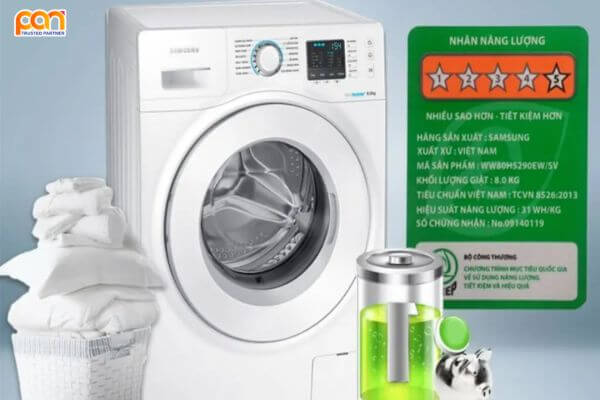
- Choose equipment with suitable energy efficiency: Consider machines with energy-saving technologies or variable power adjustment according to actual load conditions.
- Use an appropriate load size: Make effective use of the machine's capacity without exceeding the maximum recommended laundry weight.
- Select the appropriate washing programme: Choose a cycle based on fabric type, soil level, and actual requirements to avoid unnecessary operating time.
- Use cold-water washing when appropriate: For equipment with water-heating functions, cold-water programmes may reduce the electricity required for heating.
- Clean and maintain the equipment regularly: Clean the drum, filters, detergent compartments, and inspect related components according to the maintenance schedule.
- Turn off the machine when not in use: Avoid leaving the equipment in standby mode for unnecessarily long periods.
Conclusion
The monthly electricity cost of a washing machine depends on its rated power, operating time, usage frequency, and electricity rate. Using the electricity consumption formula helps users estimate costs and adjust their operating habits accordingly.
Avoiding overloading, selecting suitable programmes, using the correct amount of detergent, and maintaining the equipment regularly can help improve operating efficiency, reduce unnecessary energy consumption, and extend the washing machine's service life.
For businesses using industrial laundry systems, selecting equipment with suitable capacity, flexible operating programmes, and professional maintenance support is important for controlling operating costs and maintaining productivity.
Contact PAN for Industrial Laundry Equipment Consultation
If your business needs advice on industrial washing machines, laundry systems, or equipment solutions suitable for your operational scale, please contact PAN for professional support.
PAN Trading JSC
📞 Hotline: (+84) 28 3840 2222 | 0919 302 879
📧 Email: contact@pantrading.vn
🌐 Website: pantrading.vn | thietbigiatcongnghiep.com