Introduction to Industrial Washing Machines
Industrial washing machines are designed to handle large laundry volumes, frequent operation, and demanding professional laundry requirements. Compared with household washing machines, they generally offer higher capacity, more robust construction, and specialized wash programs for different textile types and operating needs.
Industrial washing machines are commonly used in hotels, restaurants, hospitals, care facilities, factories, businesses, and professional laundry operations.
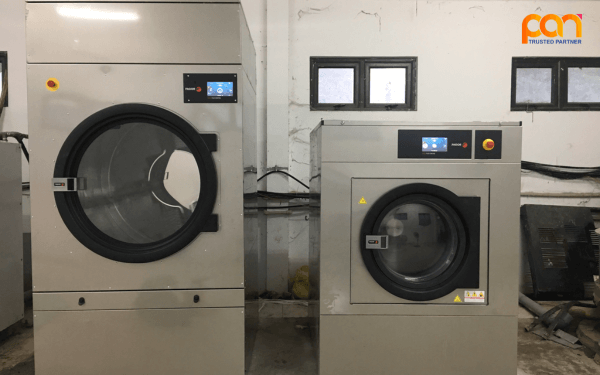
The Role of Industrial Washing Machines in Laundry Operations
Improve Operational Efficiency
- Save time: Industrial washing machines can process large textile volumes according to the operating requirements of professional laundry facilities.
- Increase productivity: High-capacity equipment helps meet frequent laundry processing demands.
Maintain Washing Quality
- Effective cleaning: Wash programs can be selected according to textile type and soil level.
- Textile protection: Choosing appropriate wash programs and parameters helps minimize unnecessary stress on fabrics.
Support Hygiene Requirements
- Wash programs can be combined with suitable temperatures and laundry chemicals according to textile processing requirements.
- The machines can process different textile groups when loads are properly sorted and handled.
Control Operating Costs
- Selecting suitable wash programs helps control water, electricity, and operating time.
- Proper operation also helps minimize unnecessary wear on the machine and textiles.
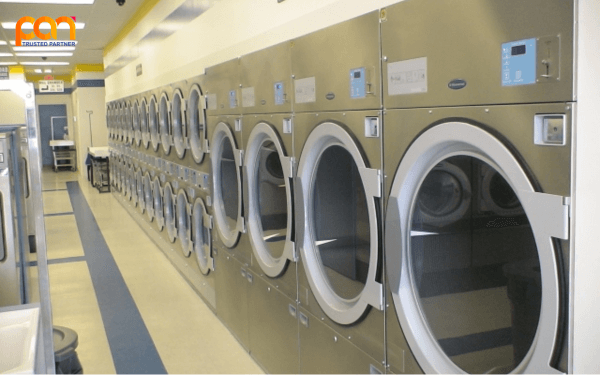
Important Tips for Using Industrial Washing Machines
To maintain the performance and service life of an industrial washing machine, operators should follow the manufacturer's instructions and carry out the necessary checks before, during, and after operation.
Before Operating the Machine
- Read the operating instructions: Each model has its own configuration, programs, and operating requirements. Operators should understand the specifications and safety instructions before use.
- Check the power supply: Ensure that the electrical supply is stable and suitable for the equipment's technical requirements.
- Check the water pipes: Inspect the water supply and drainage systems to ensure they are free from leaks and blockages.
- Sort textiles: Sort items according to material, color, and soil level to select an appropriate wash program.
During Operation
- Avoid overloading: Do not exceed the machine's rated capacity. Overloading can reduce washing performance and place additional stress on the equipment.
- Use suitable laundry chemicals: Select detergents and chemicals according to the textile type, wash program, and machine requirements.
- Do not open the door during operation: Only open the machine when it has stopped and the safety mechanism permits access.
- Clean the machine regularly: Clean the wash drum, chemical dispenser, and other required components to maintain suitable operating conditions.
Industrial Washing Machine Maintenance
- Perform regular inspections: Check components such as belts, pulleys, bearings, and other relevant parts according to the maintenance schedule.
- Handle faults correctly: If the equipment shows abnormal behavior, stop the machine and contact qualified technical personnel or a professional service provider.
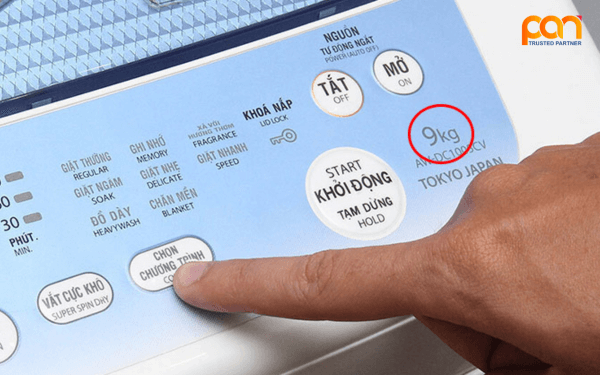
Common Problems When Using Industrial Washing Machines
The Washing Machine Does Not Operate
Possible causes:
- Power supply interruption.
- Fuse or electrical protection device has tripped.
- Control board malfunction.
- Machine door is not properly closed.
Possible solutions:
- Check the power supply and electrical protection devices.
- Check the relevant connections.
- Make sure the machine door is properly closed.
- Contact a technician if a control board fault is suspected.
The Washing Machine Does Not Fill with Water
Possible causes:
- Water supply valve is closed.
- Water inlet pipe is blocked.
- Water pressure is insufficient.
- Water level sensor malfunction.
Possible solutions:
- Check and fully open the water supply valve.
- Inspect and clean the inlet pipe if blocked.
- Check water pressure and provide a pressure-boosting solution if required.
- Contact a technician to inspect the water level sensor when necessary.
The Washing Machine Does Not Drain
Possible causes:
- Drainage pipe is blocked.
- Drain pump malfunction.
- Drain valve is stuck or damaged.
Possible solutions:
- Inspect and clean the drainage pipe.
- Check the drain pump and replace it if necessary.
- Inspect, clean, or replace the drain valve when damaged.
Water Leakage
Possible causes:
- Damaged rubber seal.
- Leak in the water supply or drainage pipe.
- Drain valve malfunction.
Possible solutions:
- Inspect and replace the rubber seal when necessary.
- Check and tighten pipe connections.
- Inspect and replace the drain valve if required.
Excessive Vibration
Possible causes:
- Machine is not properly leveled.
- Machine feet are damaged or unstable.
- Textiles are unevenly distributed inside the drum.
Possible solutions:
- Check and adjust the machine leveling.
- Inspect and replace damaged machine feet.
- Distribute textiles evenly within the drum and stay within the appropriate load capacity.
Excessive Noise
Possible causes:
- Worn drive belt.
- Damaged bearings.
- Problems with rotating components.
Possible solutions:
- Inspect and replace the drive belt when necessary.
- Inspect and replace damaged bearings.
- Check the relevant components and perform repairs according to technical instructions.
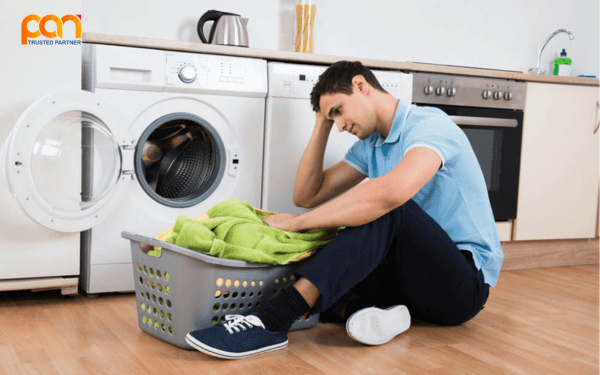
Looking for an Industrial Washing Machine or Operation Consultation?
When investing in an industrial washing machine, selecting equipment according to capacity, textile types, and actual operating requirements is important. Operators should also follow the manufacturer's instructions and maintenance procedures to maintain equipment performance.
PAN TRADING JSC provides industrial laundry equipment and consultation to help businesses select equipment suitable for their actual operating needs.
Conclusion
Proper operation of an industrial washing machine helps maintain performance, reduce potential problems, and support a longer equipment service life. Operators should inspect the machine before use, select suitable wash programs and laundry chemicals, avoid overloading, clean the equipment regularly, and follow a preventive maintenance schedule.
Contact Information
PAN TRADING JSC
📞 Hotline: (+84) 28 3840 2222 | 0919 302 879
📍 Address: 142 B2 Street, Sala Urban Area, An Khanh Ward, Ho Chi Minh City, Vietnam
📧 Email: contact@pantrading.vn
🌐 Website: pantrading.vn | thietbigiatcongnghiep.com