Industrial Laundry Process
The industrial laundry process plays an important role in handling large volumes of clothing, towels, bedding and other textile products for hotels, hospitals, factories, restaurants and professional laundry facilities. A well-organized process helps save time, maintain textile quality and improve overall operational efficiency.
In general, an industrial laundry process includes collecting soiled items, sorting, washing, drying, quality inspection, finishing, folding, packaging and delivery.
Collection and Transportation of Soiled Items
The first step in the industrial laundry process is collecting soiled textiles from customers or designated service areas and transporting them to the laundry plant or processing facility.
Suitable carts or transportation equipment should be used to minimize direct contact with soiled items. Clean and dirty textiles should also be kept separate to reduce the risk of cross-contamination and maintain hygienic conditions.
Employees should follow workplace safety procedures when lifting, moving or transporting heavy laundry loads.
Sorting Laundry
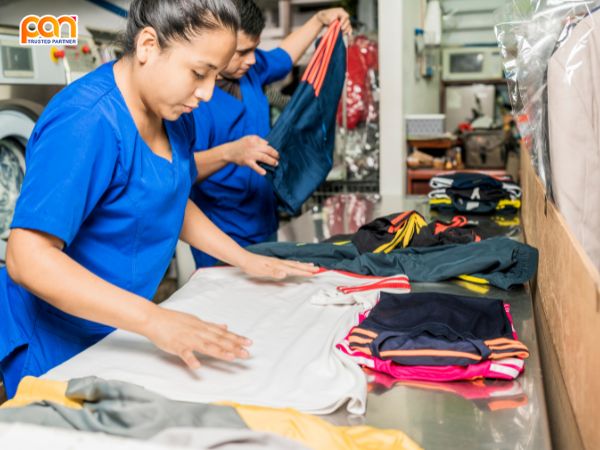
Sorting is one of the most important stages of the industrial laundry process. Textiles should be separated according to material, color, size, level of soiling and processing requirements.
Proper sorting helps select the appropriate washing program and reduces the risk of color fading, shrinkage or textile damage. Special items such as hotel towels, uniforms, bedding and healthcare textiles may require separate handling procedures.
Washing with Industrial Washing Machines
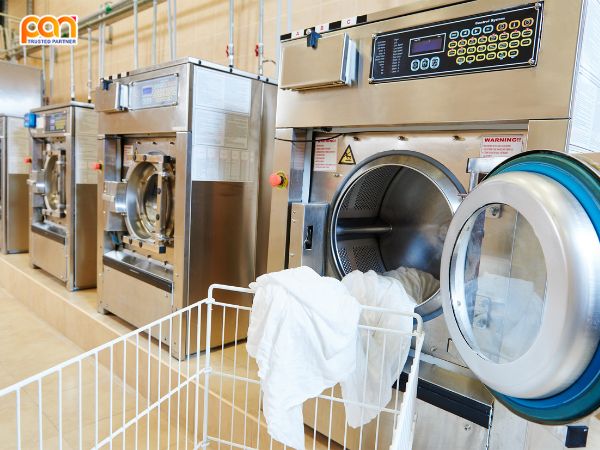
After sorting, textiles are loaded into industrial washing machines suitable for the required load size and material type. Operators need to select the appropriate washing program, water temperature, chemicals and water volume.
A typical industrial washing cycle may include:
- Pre-washing to remove loose dirt and initial stains.
- Main washing with the appropriate program and chemicals.
- Rinsing to remove residual cleaning agents.
- Extraction to reduce moisture before drying or finishing.
Industrial washing machines help process large textile volumes while maintaining consistent results and reducing reliance on manual operations.
Pressing and Drying
After washing, textiles are transferred to the pressing and drying area depending on their processing requirements. Industrial dryers help remove moisture efficiently, while pressing equipment can support smoothing and shaping certain textile products.
Drying temperature, cycle time and operating programs should be adjusted according to the type of fabric. Appropriate settings help reduce shrinkage, deformation and other quality issues.
Post-Wash Quality Inspection
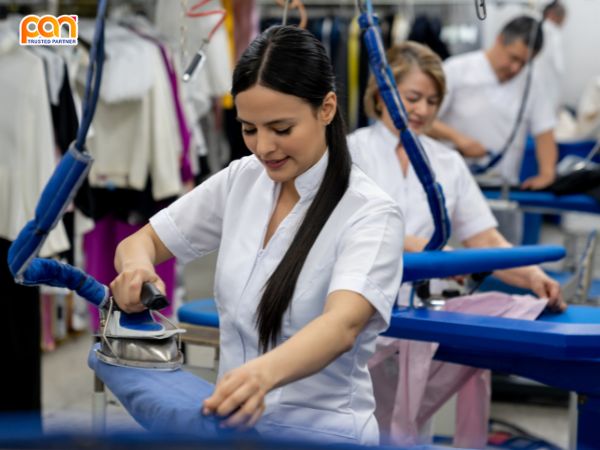
After washing and drying, textiles should be inspected before moving to the finishing stage. Operators check cleanliness, color, shape and any visible issues such as remaining stains, discoloration or damage.
If items do not meet the required quality standards, the cause should be identified and an appropriate reprocessing method selected. Quality inspection helps ensure that finished textiles meet the agreed service requirements before delivery.
Ironing and Textile Finishing
Once textiles have been cleaned and dried, they are transferred to the ironing and finishing area. Depending on the product type, industrial irons, pressing machines or specialized finishing equipment may be used.
This stage helps smooth the surface, restore the shape and improve the appearance of textiles before packaging. Temperature and processing time should be adjusted according to fabric characteristics to protect product quality.
Folding and Sorting
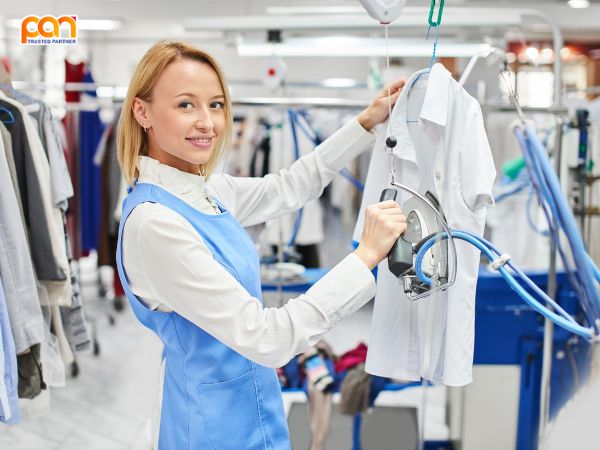
After finishing, textiles are folded and sorted according to customer requirements. In high-volume laundry facilities, automated folding and sorting equipment can help reduce manual handling, save time and maintain consistency.
Folding methods should be appropriate for different textile products, including towels, bed sheets, uniforms, clothing and blankets. Quantity control and identification procedures should also be maintained to minimize errors during delivery.
Packaging
Once all processing stages are completed, textiles are carefully packaged to protect them from dust, moisture and external impacts during storage or transportation.
For hotels, hospitals and businesses using regular laundry services, textiles may be packaged by department, area or order to simplify inventory control and handover.
Delivery
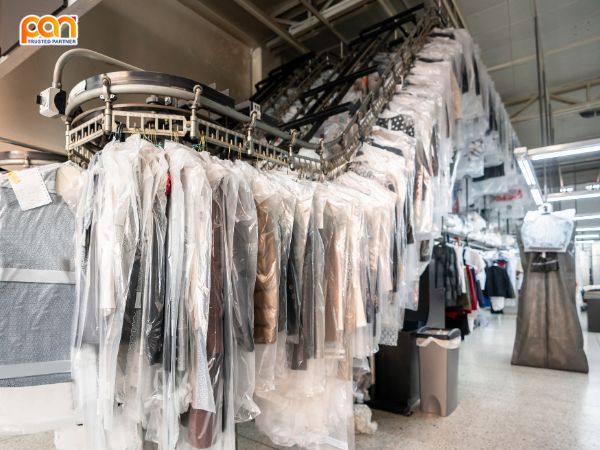
Packaged textiles are delivered to customers according to the agreed schedule and requirements. Clean items should remain separated from soiled materials throughout transportation.
Accurate delivery, timely service and complete order handling contribute to service quality and customer satisfaction in the industrial laundry industry.
Specialized Laundry Processes
In addition to the standard industrial laundry process, different industries may apply specialized methods depending on textile types, hygiene requirements and quality standards.
Hotel Laundry Process
Hotels regularly process towels, bed sheets, pillowcases, uniforms and other guest-related textiles. Therefore, hotel laundry operations require consistency, fast processing and stable quality.
Hotel textiles are generally sorted into different categories before being loaded into industrial washing machines. Washing, drying, ironing, folding and packaging are then carried out according to the hotel's internal standards and operating procedures.
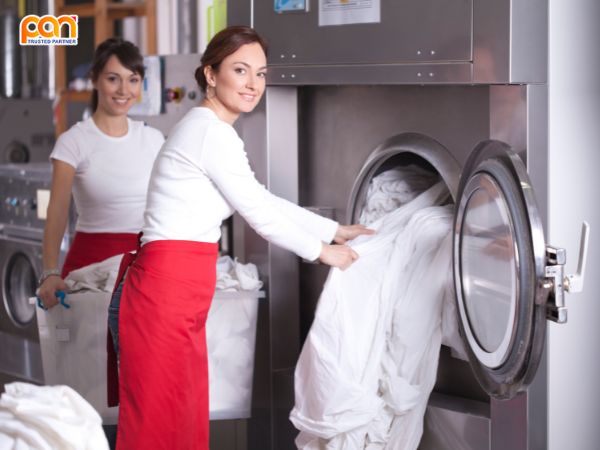
Industrial Washing and Drying Process
Washing and drying is one of the most common processes in industrial laundry facilities. Combining industrial washing machines and dryers helps reduce processing time and improves production planning.
For optimal performance, businesses should select equipment with capacities that match actual laundry volumes and develop washing and drying programs suitable for each textile type.

Dry Cleaning Process
Dry cleaning is used for certain garments and materials that are not suitable for conventional water washing. This method uses specialized solvents and equipment to clean textiles while preserving their shape and characteristics.
Dry cleaning operations should be performed by trained personnel and comply with requirements for chemical safety, ventilation and solvent handling.
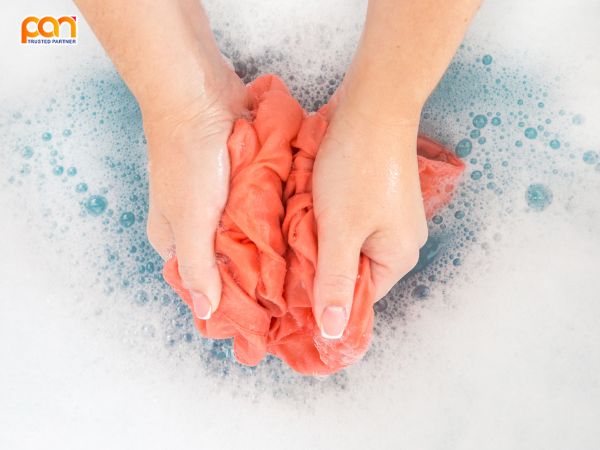
Hand Washing for Special Textile Care
Although industrial machinery is the primary solution in modern laundry facilities, some delicate fabrics may still require hand washing according to the manufacturer's care instructions.
Hand washing can be suitable for special materials or situations where the level of mechanical action needs to be carefully controlled.
How Many Steps Are There in Hand Washing and Drying?
A basic hand-washing process can include six steps:
- Sort the clothing.
- Prepare a suitable washing solution.
- Wash gently.
- Rinse thoroughly.
- Remove excess water.
- Air-dry or dry according to care instructions.
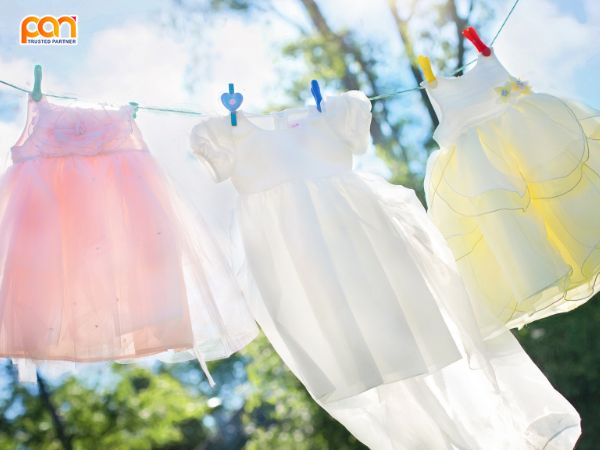
The washing method should always be selected according to the fabric type to reduce the risk of stretching, deformation or damage.
Frequently Asked Questions About Hand Washing
Which types of clothing should be hand washed?
Some delicate materials, such as wool, lace, silk and thin fabrics, may require hand washing according to the care label. Structured garments such as suits and certain coats may also require specialized handling to prevent damage.
Should tools be used to support hand washing?
Soft brushes, gloves and washing basins can support the cleaning process. However, they should be used properly and excessive scrubbing should be avoided. Washing tools should also be cleaned regularly to maintain hygienic conditions.
How should stubborn stains be treated when hand washing?
For difficult stains, an appropriate pre-treatment product can be applied according to the fabric type before washing. Excessive rubbing should be avoided because it may damage the textile surface. Soaking and pre-treatment should follow the cleaning product instructions and fabric care requirements.
Conclusion
The industrial laundry process consists of several connected stages, including collection, sorting, washing, drying, inspection, finishing, packaging and delivery. Each stage has a direct impact on textile quality and laundry facility efficiency.
Investing in suitable industrial washing machines, dryers and finishing equipment helps businesses control their processes, improve productivity and meet the demands of large-scale textile care.
If your business is looking for professional industrial laundry equipment and solutions tailored to its operational requirements, PAN Trading JSC is ready to provide consultation and support.
PAN TRADING JOINT STOCK COMPANY
📞 Hotline: (+84) 28 3840 2222 | 0919 302 879
📧 Email: contact@pantrading.vn
🌐 Website: pantrading.vn | thietbigiatcongnghiep.com