What Are Industrial and Household Washing Machines?
Industrial and household washing machines both clean textiles, but they are designed for different operating environments. The main differences relate to capacity, load size, construction, operating frequency, installation requirements, and maintenance.
Industrial Washing Machines
Definition
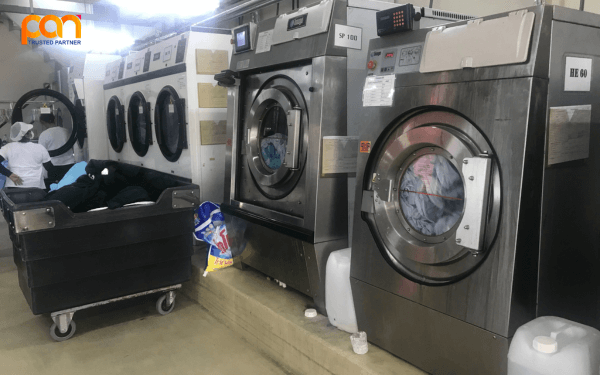
Industrial washing machines are designed to process large textile volumes on a regular or continuous basis. They are commonly used in hotels, resorts, hospitals, professional laundry facilities, restaurants, factories, and other businesses with centralized laundry requirements.
Key Characteristics
- Capacity: Depending on the model, industrial machines can handle loads ranging from several dozen to hundreds of kilograms per wash cycle.
- Size: They are considerably larger than household machines and generally require suitable installation space and infrastructure.
- Materials: They use robust materials designed to withstand demanding operating conditions.
- Motor and drive system: Designed to support frequent operation and large laundry loads.
- Spin speed: Depending on the model and configuration, the spin system is designed to reduce residual moisture after washing.
- Investment cost: Generally higher than household machines because of their capacity, construction, and operating requirements.
Applications
Industrial washing machines are suitable for facilities that process large textile volumes regularly, including hotels, restaurants, resorts, hospitals, schools, factories, industrial facilities, and professional laundry businesses.
Household Washing Machines
Definition
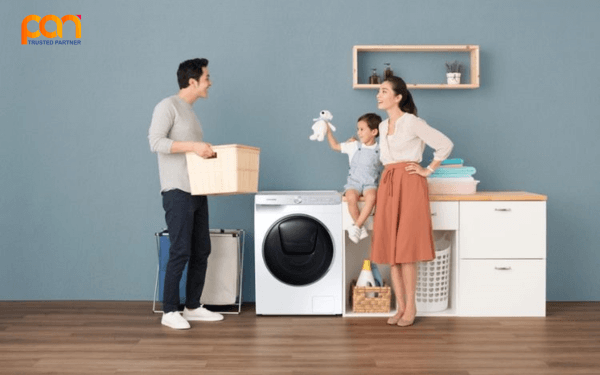
Household washing machines are designed for everyday laundry in residential environments, with capacity and operating frequency suited to household use.
Key Characteristics
- Capacity: Commonly around 5–12 kg depending on the model, suitable for household laundry needs.
- Size: Compact construction makes them suitable for homes and apartments.
- Features: Often include convenient programs such as quick wash, energy-saving wash, and programs for different fabric types.
- Motor: Designed for the operating frequency and laundry volumes normally associated with household use.
- Spin speed: Suitable for everyday residential laundry requirements.
- Investment cost: Generally considerably lower than industrial washing machines.
Applications
Household washing machines are suitable for residential users with everyday laundry requirements and moderate textile volumes.
Differences Between Industrial and Household Washing Machines
Intended Use
- Industrial washing machines: Designed for large laundry volumes, frequent operation, and professional laundry environments.
- Household washing machines: Designed for everyday laundry at a residential scale.
Capacity and Load Size
- Industrial washing machines: Offer larger capacities for processing substantial textile volumes per cycle.
- Household washing machines: Have smaller capacities suited to residential laundry volumes.
Operating Speed and Performance
- Industrial washing machines: Designed to process large textile volumes and support frequent operation.
- Household washing machines: Designed for normal household laundry and are not intended for continuous high-volume processing.
Size and Installation Requirements
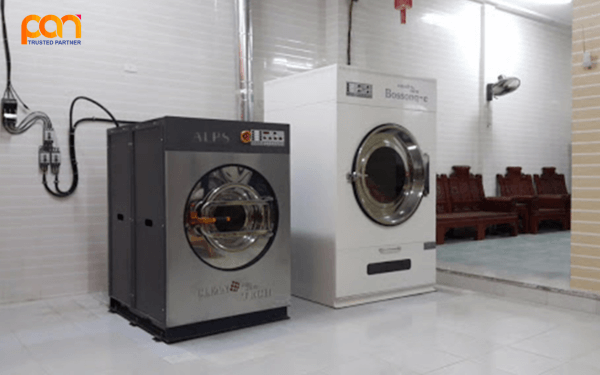
- Industrial washing machines: Larger in size and generally require suitable electrical, water supply, and drainage infrastructure.
- Household washing machines: More compact and easier to position within residential spaces.
Materials and Durability
- Industrial washing machines: Built with construction and materials suited to demanding operating conditions, large loads, and frequent use.
- Household washing machines: Designed for normal residential operating conditions and frequency.
Features and Technology
- Industrial washing machines: Focus on large-load processing, specialized wash programs, and control of operating parameters.
- Household washing machines: Focus on residential convenience, including quick wash, energy and water saving, gentle washing, and fabric-specific programs.
Cost and Maintenance
- Industrial washing machines: Generally involve higher investment and maintenance requirements and may require qualified technical personnel.
- Household washing machines: Generally involve lower investment and simpler maintenance requirements.
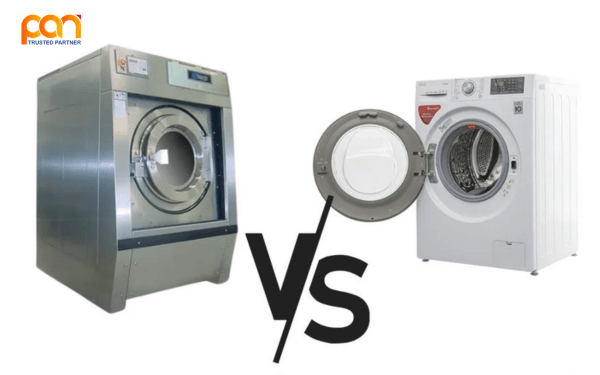
Similarities Between Industrial and Household Washing Machines
- Primary function: Both use water, laundry chemicals, and drum movement to clean textiles.
- Operating principle: Both combine mechanical movement, water, and detergents to remove dirt from fabrics.
- Wash programs: Depending on the model, both can provide different programs for fabric types and soil levels.
- Safety features: Modern machines can include protection mechanisms and operating alerts.
- Resource management: Many modern models include programs designed to control water, electricity, and operating time.
Advantages and Limitations of Each Type
Industrial Washing Machines
Advantages
- Large capacity: Can process substantial textile volumes in a single wash cycle.
- Suitable for frequent operation: Designed for professional laundry environments with regular processing requirements.
- Specialized programs: Can support different textile processing requirements in professional laundry operations.
- Heavy-duty construction: Designed for demanding operating conditions and larger loads.
Limitations
- Higher initial investment: Requires a larger investment than household equipment.
- Space requirements: Requires suitable installation space.
- Infrastructure requirements: Electrical, water supply, and drainage systems must meet the equipment requirements.
- Maintenance: Requires regular maintenance and may require qualified technical personnel.
Household Washing Machines
Advantages
- Compact size: Easy to install in residential spaces.
- Household-oriented investment: Available in different capacities and configurations for residential needs.
- Convenient features: Offers programs designed for everyday laundry.
- Simpler infrastructure: Suitable for typical residential installation conditions.
Limitations
- Limited capacity: Not intended for large and continuous textile processing.
- Not designed for intensive operation: Operating frequency is intended for household use.
- Limited professional textile processing: Not every household model is suitable for the specialized requirements of professional laundry operations.
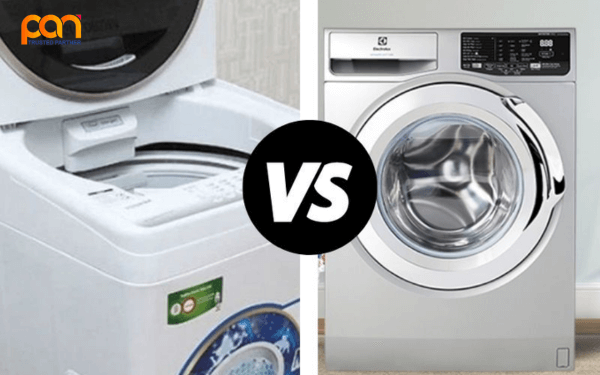
Which Type Should You Choose?
The appropriate choice depends on actual laundry requirements rather than capacity or purchase price alone.
- For households: Household washing machines are generally designed for everyday laundry and moderate textile volumes.
- For hotels, hospitals, restaurants, factories, and professional laundries: Industrial washing machines are designed for larger textile volumes, frequent operation, and professional laundry requirements.
- For laundry projects: In addition to the washing machine, businesses should consider the overall installation space, water supply and drainage, electrical infrastructure, dryers, and textile finishing equipment where required.
Looking for an Industrial Washing Machine?
When selecting an industrial washing machine, businesses should determine the required load capacity, operating frequency, textile types, installation space, and available infrastructure. Selecting the appropriate configuration from the beginning helps the industrial laundry system meet actual operating requirements.
PAN TRADING JSC provides industrial laundry equipment and consultation to help businesses select equipment suitable for their operational needs.
Conclusion
Industrial and household washing machines both clean textiles but are designed for different operating environments. Industrial washing machines are intended for larger volumes and more frequent operation, while household machines focus on everyday residential laundry.
When selecting equipment, users should consider load capacity, operating frequency, installation space, technical infrastructure, and actual textile processing requirements.
Contact Information
PAN TRADING JSC
📞 Hotline: (+84) 28 3840 2222 | 0919 302 879
📍 Address: 142 B2 Street, Sala Urban Area, An Khanh Ward, Ho Chi Minh City, Vietnam
📧 Email: contact@pantrading.vn
🌐 Website: pantrading.vn | thietbigiatcongnghiep.com