Industrial washing machines play an important role in handling large volumes of textiles generated in manufacturing environments. From work uniforms and machine-cleaning towels to production fabrics, these items require regular and effective cleaning to support hygiene and a professional working environment.
With high-capacity designs and the ability to operate continuously, industrial washing machines can help manufacturers reduce laundry processing time, optimize labor requirements, and better control operating costs.
Benefits of Industrial Washing Machines in Export Processing Zones
Industrial washing machines are suitable for export processing zones with large and frequent laundry requirements. Selecting the right equipment can improve laundry efficiency while supporting hygiene and operational requirements.
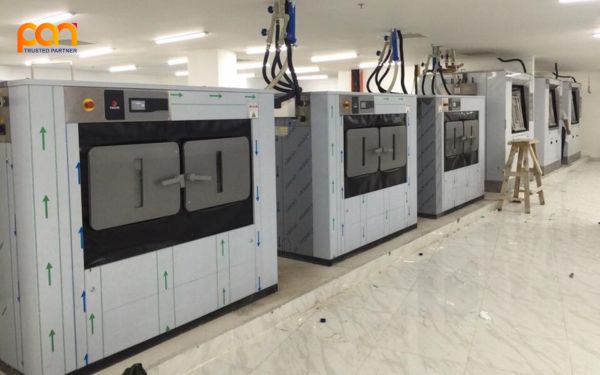
Efficiently Handle Large Laundry Volumes
Daily laundry requirements in export processing zones may include:
- Work uniforms for employees.
- Industrial and machine-cleaning towels.
- Production fabrics and textile materials used in manufacturing.
High-capacity industrial washing machines can process large laundry loads per cycle. Their ability to operate for extended periods can also help maintain a stable laundry workflow and reduce interruptions.
Support Hygiene Requirements
For manufacturing sectors with strict hygiene requirements, suitable laundry equipment can help process uniforms, cleaning towels, and other textiles regularly. Specialized washing programs can support deep cleaning and the removal of dirt, dust, and industrial grease depending on the type of laundry.
The source content also refers to technologies such as high-temperature washing and UV treatment for certain applications to support specific hygiene requirements.
Save Time and Labor Costs
Industrial washing machines can automate several stages of the laundry process, from washing to extraction. This helps reduce processing time and the amount of manual work required.
- Shorter washing cycles.
- Reduced manual labor requirements.
- More efficient extraction, helping reduce drying time.
Optimize Energy and Resource Consumption
Modern industrial washing machines are designed to optimize the use of water, electricity, and laundry chemicals.
- Water efficiency: Some systems can optimize or reuse water during the washing process.
- Energy efficiency: Motor and inverter technologies can help reduce electricity consumption.
- Chemical efficiency: Appropriate washing programs can optimize detergent usage according to laundry requirements.
These factors can contribute to better operating cost control and more efficient resource use.
Durable and Reliable Operation
Industrial washing machines are designed for frequent operation with durable construction and materials. The source content highlights brands such as Fagor and IPSO for stable operation in manufacturing environments.
- Suitable for extended operating periods.
- Helps reduce equipment-related interruptions.
- Suitable for long-term investment and operation.
Enhance Professionalism
Keeping uniforms, cleaning towels, and other textiles clean contributes to a cleaner and more professional working environment. For manufacturing businesses, this can also support the company's image when working with partners, customers, and quality inspection teams.
How to Choose an Industrial Washing Machine for an Export Processing Zone
The right equipment should be selected based on laundry volume, operating frequency, textile types, and the actual working conditions of the facility.
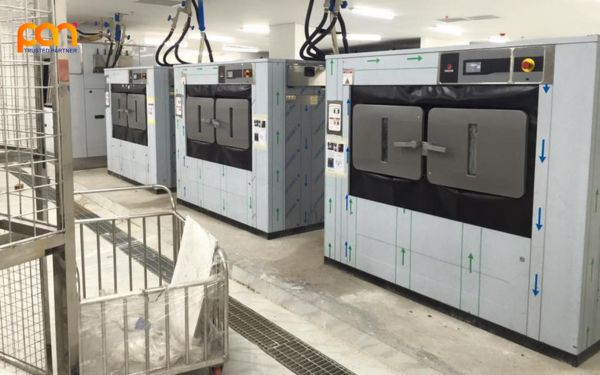
Capacity Suitable for the Operation
Capacity is one of the most important factors. According to the source content, small and medium-sized businesses may consider machines from 15–30kg per load, while larger laundry requirements may require machines of 50kg per load or more.
Selecting the appropriate capacity helps the machine handle actual laundry volumes without unnecessary energy consumption or excessive operating loads.
Reliable Brand and Equipment Quality
Brand reputation should be considered when investing in equipment intended for frequent operation. The source content mentions Fagor and IPSO as industrial washing machine brands suitable for manufacturing-related laundry requirements.
Technology and Features
Depending on actual requirements, businesses can consider features such as:
- Washing programs for different fabrics and soil levels.
- Energy- and water-saving technologies.
- Specialized washing programs for specific laundry requirements.
- Water optimization or recycling systems where available.
Warranty and Technical Support
Industrial washing machines require regular maintenance to maintain stable performance. When selecting a supplier, businesses should consider:
- Warranty policy and coverage period.
- Installation, maintenance, and repair services.
- Availability of replacement parts.
Quotation and Total Investment Cost
The price of an industrial washing machine depends on capacity, brand, technology, and accompanying services. When comparing quotations, businesses should consider the total investment, including equipment, transportation, installation, warranty, and maintenance costs.
Energy Efficiency and Environmental Considerations
Businesses seeking to optimize costs and resource consumption can consider machines designed to reduce water, electricity, and chemical usage. This can also support broader operational sustainability goals.
Scalability and Upgrade Potential
If laundry demand is expected to increase, businesses should consider systems that can be expanded or upgraded. This can help the equipment continue meeting operational requirements as the business grows.
Practical Applications of Industrial Washing Machines in Export Processing Zones
Industrial washing machines can be used across different manufacturing sectors, depending on textile types and specific hygiene requirements.
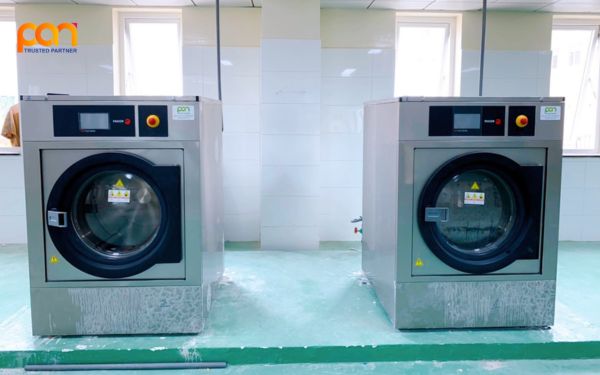
Food Manufacturing
Industrial washing machines can be used to process work uniforms, equipment-cleaning towels, and other textiles that require regular cleaning in food manufacturing environments.
Garment Manufacturing
In garment manufacturing, industrial washing machines can support the cleaning of fabrics before or after production, finished textile products, and employee uniforms.
Electronic Component Manufacturing
Industrial washing machines can be used to process cleaning towels and specialized textile items, as well as employee uniforms in production environments where dust control is important.
Heavy Industry
Protective workwear and machine-cleaning towels can be exposed to oil, grease, dust, and other industrial contaminants. Industrial washing machines can support the appropriate processing of these textiles.
Medical and Pharmaceutical Manufacturing
For medical and pharmaceutical manufacturing facilities, industrial washing machines can be used to process lining fabrics, cleaning towels, and employee uniforms according to the hygiene requirements of each operation.
In-House Laundry Services
Some export processing zones may operate in-house laundry services for workers and tenant businesses. In such cases, industrial washing machines help handle large laundry volumes while maintaining efficient operations.
Manufacturing Requiring International Standards
Manufacturers serving export markets may need to follow specific hygiene and quality requirements. Industrial washing machines can support the cleaning and processing of textiles used within production operations.
Industrial Washing Machine Pricing for Export Processing Zones
The price of an industrial washing machine depends on factors such as capacity, brand, integrated technology, and accompanying services. To obtain a suitable quotation, businesses should provide information about laundry volume, textile types, operating frequency, and installation conditions.
Factors Affecting Industrial Washing Machine Prices
- Machine capacity: Larger-capacity machines generally require a higher investment.
- Brand: Brand and machine configuration influence the purchase price.
- Technology: Features such as energy efficiency, specialized washing programs, and water recycling systems may affect the investment cost.
- Additional services: Transportation, installation, warranty, and after-sales support should be considered as part of the total budget.
Request a Quotation and Equipment Consultation
Businesses should contact a supplier directly to discuss the appropriate configuration, receive a detailed quotation, and determine the installation, operation, and maintenance requirements. :contentReference[oaicite:16]{index=16}
Choosing an Industrial Washing Machine Supplier
For businesses operating in export processing zones, selecting a supplier should involve more than evaluating the equipment itself. Installation, warranty, maintenance, technical support, and after-sales service are also important considerations.
According to the source content, PAN provides industrial washing machines in different capacities and from brands such as Fagor and IPSO, together with consultation, installation, warranty, and technical support.
Conclusion
Industrial washing machines for export processing zones are a practical solution for businesses that need to process large volumes of uniforms, cleaning towels, protective workwear, and other textiles generated during manufacturing. Selecting the right capacity, features, durability, and support services can help businesses optimize laundry operations, control costs, and maintain stable performance.
Contact PAN for Consultation
If your business is looking for an industrial washing machine or needs advice on selecting equipment suitable for its laundry operation, PAN can support you from equipment selection to industrial laundry solution consultation.
Contact PAN for consultation on industrial laundry equipment and solutions.
Contact Information
PAN TRADING JSC
📍 142 B2 Street, Sala Urban Area, An Khanh Ward, Ho Chi Minh City, Vietnam
📞 (+84) 28 3840 2222 - 0919 302 879
🌐 pantrading.vn | thietbigiatcongnghiep.com
📩 contact@pantrading.vn