In the hospitality industry, linen is an important part of service quality. Bed sheets, pillowcases, towels, table linens, napkins, uniforms and other textile items are used frequently and need to be processed continuously.
A well-organized laundry process not only helps maintain cleanliness and appearance standards but also supports productivity, reduces unnecessary handling, minimizes linen losses and improves control over operating costs.
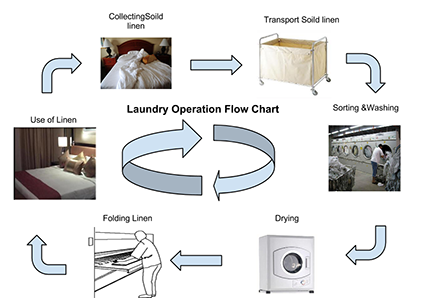
Depending on the size and operating model of each property, the laundry workflow may vary. However, a professional laundry process for hotels and restaurants generally includes the following key stages.
1. Collection of Used Linen
Used linen is collected from guest rooms, restaurants, banquet areas, spas and other service areas and transported according to the property's established procedures.
During collection, linen should not be dragged across the floor or handled in a way that may cause additional soiling or damage. Used linen should be placed in appropriate bags, carts or collection containers to support efficient handling and transportation to the laundry area.
A well-planned collection schedule also helps the laundry department manage daily workloads and maintain a more consistent processing flow.
2. Transportation to the Laundry Area
After collection, used linen is transported to the laundry department or designated laundry area. For larger hotels and resorts, an organized transportation flow can help reduce handling time, minimize the risk of linen loss and improve overall operational efficiency.
Where necessary, linen can also be managed according to its source or department, especially in properties with multiple operations such as accommodation, restaurants, banquet facilities and spas.
3. Linen Sorting
Sorting is one of the most important stages before washing. Linen may be sorted based on factors such as:
- Type of linen and fabric composition.
- Colour.
- Level of soiling.
- Type of stains.
- Required washing and finishing methods.
Proper sorting helps determine the appropriate washing program, temperature, chemicals and processing time for each type of textile. It also helps reduce the risk of colour transfer, fabric damage and unnecessary wear caused by unsuitable mixed loads.
4. Inspection and Pre-treatment of Stains
Some items may require inspection and stain treatment before entering the washing process. Difficult stains such as grease, food, cosmetics or other localized stains may require appropriate pre-treatment.
Effective stain treatment can improve overall wash results and reduce the need for repeated washing cycles, helping to protect productivity, control operating costs and extend the useful life of linen.
5. Washing
Once sorting and pre-treatment are completed, linen is loaded into commercial or industrial washing equipment according to the appropriate load capacity and washing program.
A washing cycle may include different stages such as water supply, washing, rinsing, chemical treatment and extraction. Operating parameters should be selected based on the type of textile, fabric characteristics and level of soiling.
Overloading equipment should be avoided. Excessive loading can affect washing performance, machine operation and the long-term durability of both the equipment and the linen.
6. Water Extraction
After washing, excess water is removed from the linen before it proceeds to drying or finishing.
The efficiency of water extraction has a direct impact on drying time and energy consumption. For this reason, the extraction stage should be considered as part of the overall laundry system, particularly in high-volume operations.
7. Drying or Flatwork Ironing
Depending on the type of textile, washed linen may be transferred to industrial dryers or directly to flatwork finishing equipment.
Items such as towels, spa linen and certain uniforms are commonly processed in industrial dryers. Flat linen such as bed sheets, pillowcases, tablecloths and other similar items may be finished using industrial flatwork ironers.
Drying temperature and processing time should be selected according to the fabric type to ensure effective moisture removal while maintaining linen quality and service life.
8. Ironing, Pressing and Finishing
Uniforms, table linens and other textiles that require a high-quality appearance may undergo additional ironing, pressing or finishing before being returned to service.
Depending on the size and level of automation of the laundry operation, finishing may be performed using specialized equipment or a combination of machinery and manual handling.
9. Folding, Inspection and Sorting of Clean Linen
After finishing, clean linen should be inspected before folding, packaging or distribution. Items that do not meet the required quality standard may need to be reprocessed according to the appropriate procedure.
Clean linen can then be sorted by item type, department or destination to support efficient storage and distribution.
10. Storage and Distribution of Clean Linen
Finished linen is stored in a designated clean area before being distributed back to the relevant departments.
The storage area should be organized to help protect clean linen from dust, excessive moisture and other factors that may affect its quality. Proper inventory management also helps hotels and restaurants maintain adequate linen availability and reduce unnecessary losses.
Basic Laundry Process for Hotels and Restaurants
A typical laundry workflow can be summarized as follows:
Linen Collection → Transportation → Sorting → Stain Treatment → Washing → Water Extraction → Drying or Flatwork Ironing → Finishing → Quality Inspection → Folding → Storage and Distribution.
Why Should Hotels and Restaurants Standardize Their Laundry Process?
For hotel guests and restaurant customers, linen quality is an important part of the overall service experience. A towel that does not meet cleanliness standards, wrinkled bed linen or poorly finished uniforms can negatively affect the perception of service quality.
From an operational perspective, a standardized laundry process helps teams organize workloads more effectively, reduce unnecessary handling and improve productivity throughout the operation.
As linen volumes increase, equipment selection must also be considered as part of an integrated system. A high-capacity washing machine alone cannot guarantee efficient operation if dryers, finishing equipment or other downstream processes cannot keep pace with the production flow.
For this reason, the design of a laundry system should be based on actual linen volume, operating hours, required linen turnaround time and available installation space rather than selecting individual machines separately.
Pan Trading JSC – Laundry System Consulting for Hotels and Restaurants
Pan Trading JSC provides equipment solutions and consulting services for laundry systems serving hotels, restaurants and resorts.
From assessing operational requirements and estimating linen volumes to equipment selection, system layout, installation and operator training, we support customers in developing laundry systems suited to the scale and requirements of each project.
An efficient laundry operation requires more than individual machines. It requires a well-balanced system that considers productivity, linen quality and long-term operating efficiency.
Contact Information
Hotline: (+84) 28 3840 2222 | 0919 302 879
Website: https://pantrading.vn
Website: https://thietbigiatcongnghiep.com
Address: 142 B2 Street, Sala Urban Area, An Khanh Ward, Ho Chi Minh City, Vietnam