As demand for industrial washing machines continues to grow, building a DIY industrial washing machine has attracted attention as a way to reduce initial investment costs and make use of available resources. However, while a self-built machine may offer lower initial costs and greater customization, it may also present limitations related to performance, durability, safety and long-term operating costs.
So, should you build an industrial washing machine yourself? This article examines the advantages, limitations and key factors to consider before choosing this approach.
What Is a DIY Industrial Washing Machine?
A DIY industrial washing machine is a washing system assembled from reused components, old equipment or individual parts selected and combined according to specific requirements. Unlike a commercially manufactured industrial washing machine, a DIY machine may consist of components from different sources.
This approach is generally considered by users who want to reduce initial investment costs or need a machine with specific dimensions, capacity or configuration.
Why Do People Build DIY Industrial Washing Machines?
- Lower initial cost: Existing equipment or components can be reused to reduce the initial investment.
- Customization: Users can select certain dimensions, capacities or features according to their requirements.
- Reuse of available resources: Existing machinery and components can potentially be reused instead of discarded.
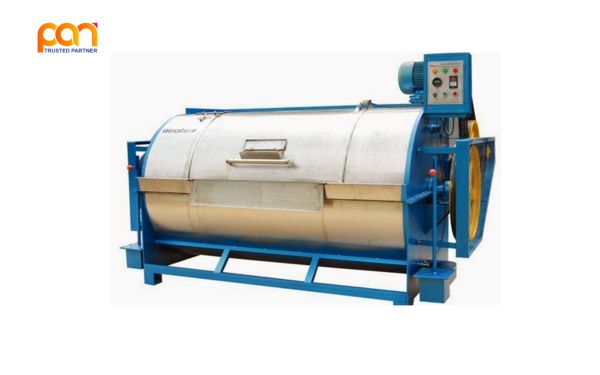
Advantages and Disadvantages of DIY Industrial Washing Machines
A DIY industrial washing machine may provide benefits in terms of initial cost and customization. However, this approach also involves several factors that should be carefully considered, especially when the machine is expected to operate frequently or in a professional laundry environment.
Advantages
Lower Initial Investment
One of the main reasons users consider DIY industrial washing machines is the possibility of reducing the initial investment. Reusing available components, machinery or equipment may reduce the amount of money required compared with purchasing a new industrial washing machine.
This can be considered for smaller-scale requirements or situations where existing resources are available.
Customization to Specific Requirements
Building a machine independently allows users to select certain components according to their actual requirements, such as dimensions, capacity or specific functions.
This flexibility may be useful when a standard commercial product does not match a particular requirement.
Reuse of Existing Components and Equipment
A DIY washing machine can make use of existing components, machinery or older equipment. This may reduce waste and allow usable parts to be reused rather than discarded.
Disadvantages
Uncertain Performance and Durability
DIY washing machines are often assembled from different components, so their level of integration may differ from that of a machine designed and manufactured as a complete system. This can affect washing performance, operating stability and durability.
For professional laundry facilities handling large volumes or requiring frequent operation, machine stability is an important consideration.
Operational Safety Risks
Industrial washing machines combine mechanical, electrical, water and control systems. If the assembly does not meet appropriate technical requirements, problems may occur involving electrical systems, water connections, drum movement or machine operation.
In particular, safety protection and control mechanisms on a DIY machine may not be as comprehensive or integrated as those designed by a professional manufacturer.
No Integrated Warranty and Technical Support
DIY machines generally do not come with a manufacturer's warranty or an integrated technical support service. When problems occur, users may need to identify the cause themselves, carry out repairs or source replacement components.
This can increase downtime and result in additional maintenance costs.
Potentially Higher Long-Term Costs
A lower initial investment does not necessarily mean lower total ownership costs. During operation, users may need to spend more on repairs, maintenance and replacement of components.
Therefore, the decision to build an industrial washing machine should consider the total cost throughout its service life rather than focusing only on the initial investment.
Limited Suitability for Professional Laundry Operations
Professional laundry facilities typically require equipment capable of handling regular workloads with consistent performance. A DIY machine may have limitations when it needs to operate at high intensity or for extended periods.
DIY Industrial Washing Machine vs. Commercial Industrial Machine
| Criteria |
DIY Washing Machine |
Commercial Industrial Washing Machine |
| Initial investment |
Generally lower |
Higher due to investment in a complete machine |
| Washing performance |
May vary depending on configuration and components |
Designed as an integrated system by the manufacturer |
| Durability |
Depends on component quality and assembly |
Designed for industrial applications |
| Safety |
Depends on the design and installed protection systems |
Includes safety and control mechanisms designed by the manufacturer |
| After-sales support |
Usually no integrated warranty and technical support system |
Warranty and technical support are available from the supplier |
When Should You Consider a Commercial Industrial Washing Machine?
For small-scale requirements, users may consider different options depending on their budget and intended use. However, when equipment is used in laundries, hotels, hospitals or other operations that process laundry regularly, factors such as reliability, operating capacity and technical support should be considered alongside the initial purchase price.
Commercial industrial washing machines are designed as integrated systems with defined technical specifications. In addition to the equipment itself, buyers can also access consultation, warranty, maintenance and technical support from the supplier.
PAN Supplies Industrial Washing Machines for Different Laundry Requirements
PAN TRADING JSC supplies industrial washing machines from established brands used in professional laundry applications, including Fagor and IPSO.
The appropriate washing machine should be selected based on laundry capacity, workload, operating frequency and the actual requirements of each facility. Proper equipment consultation from the beginning can help businesses select a machine that better matches their operational needs.
- Washing performance: Suitable for professional laundry processing requirements.
- Operating stability: Equipment is designed as an integrated system according to the manufacturer's configuration.
- Operating capacity: Different options are available for different laundry facility sizes.
- Technical support: Businesses can receive consultation on equipment selection and support during operation.
Conclusion
A DIY industrial washing machine may help reduce the initial investment and make use of available components or equipment. However, before choosing this approach, users should carefully consider performance, durability, safety, maintenance requirements and total operating costs.
For professional laundry facilities that require stable operation and regular laundry processing, choosing an industrial washing machine designed as an integrated system and supported by technical services can provide greater operational assurance.
Contact PAN for Consultation
If your business is looking for an industrial washing machine or needs advice on selecting equipment suitable for your laundry facility, PAN can support you from equipment selection to industrial laundry solution consultation.
Contact PAN for consultation on industrial laundry equipment and solutions.
Contact Information
PAN TRADING JSC
📍 142 B2 Street, Sala Urban Area, An Khanh Ward, Ho Chi Minh City, Vietnam
📞 (+84) 28 3840 2222 - 0919 302 879
🌐 pantrading.vn | thietbigiatcongnghiep.com
📩 contact@pantrading.vn