Have you ever wondered why a washing machine has three separate compartments? What is each compartment used for, and which laundry products should be placed in them? Understanding the function of each compartment helps users select the appropriate laundry products, improve washing performance, and reduce residue buildup.
In this article, we will explore the three washing machine compartments, how to use each one, and practical tips for cleaning and maintaining them.
Understanding the 3 Washing Machine Compartments
Washing machines are commonly designed with separate compartments for different laundry products. Depending on the model, the position and markings of these compartments may vary, so users should always check the manufacturer's instructions before operation.
The three common compartments include the main wash detergent compartment, fabric softener compartment, and a compartment for treatment products or pre-wash programs.
What Is Softener in a Washing Machine?
Softener refers to fabric softener, which is used during the rinse cycle to help make textiles softer, reduce static, and provide fragrance. For some dryers, dryer sheets may also be used according to the manufacturer's instructions.
Two common forms of softener include:
- Fabric Softener: A commonly used product added during the rinse cycle to help soften textile fibers.
- Dryer Sheet: A product commonly used in tumble dryers to help soften fabrics and reduce static.
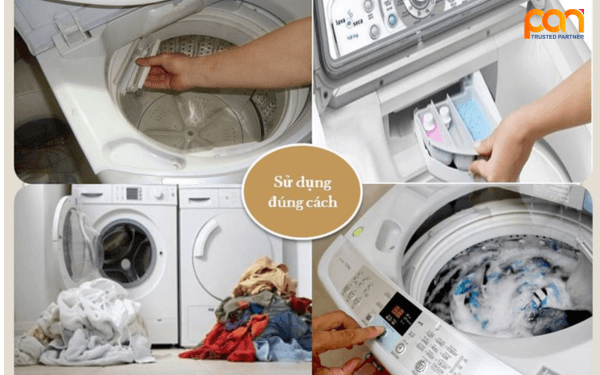
Functions of the 3 Washing Machine Compartments
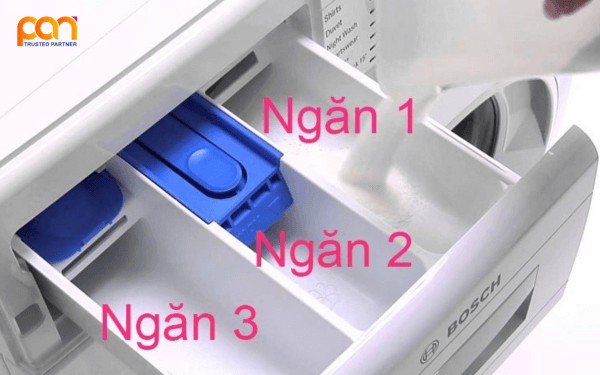
Main Wash Detergent Compartment
- Location: Usually the first or largest compartment in the dispenser.
- Marking: Depending on the model, it may be marked “II” or “Main Wash”.
- Function: Holds powder or liquid detergent for the main wash cycle.
Use the amount of detergent recommended by the manufacturer. Avoid excessive detergent, as it may create excessive foam, leave residue, and affect washing performance.
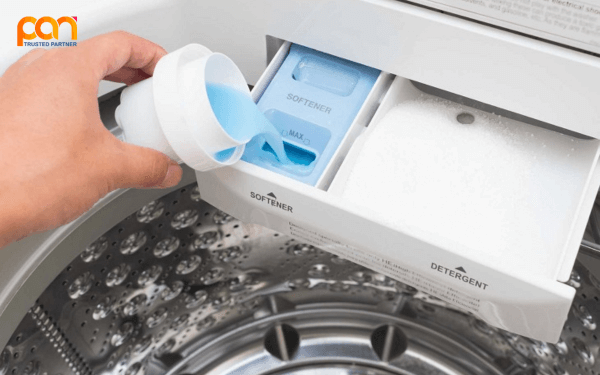
Fabric Softener Compartment
- Location: Usually the middle or smaller compartment next to the main wash compartment.
- Marking: Commonly identified by a flower symbol or the word “Softener”.
- Function: Holds fabric softener, which is released during the final rinse cycle.
Use the recommended amount of fabric softener and do not exceed the maximum fill line. Fabric softener should not be poured directly onto textiles because it may cause marks or uneven distribution on some fabrics.
Pre-Wash or Treatment Compartment
- Location: May be a separate smaller compartment depending on the machine design.
- Marking: Depending on the model, it may be marked “I” or “Pre-Wash”.
- Function: Used for detergent or treatment products intended for the pre-wash cycle to help deal with heavily soiled textiles.
Use treatment or bleaching products only when necessary and select products that are appropriate for the textile. Always check the product label and manufacturer's instructions before use to reduce the risk of discoloration or fabric damage.
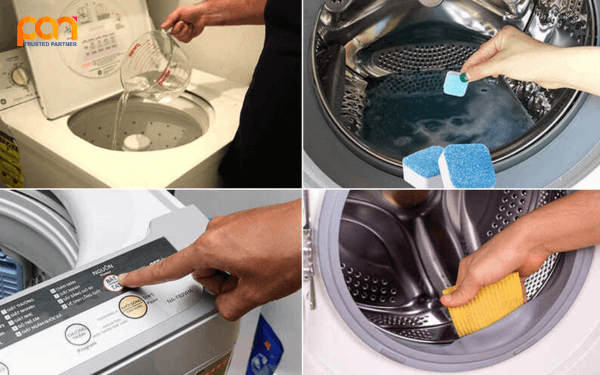
Tips for Using the 3 Washing Machine Compartments Effectively
- Clean the dispenser regularly: Detergent, liquid detergent, and fabric softener can accumulate over time. Regular cleaning helps reduce residue, odors, and mold.
- Select the appropriate washing program: Choose the program according to the textile type and soil level to ensure the appropriate laundry product is used.
- Use suitable laundry products: Not every detergent or fabric softener is suitable for every washing machine. Always check the instructions for both the machine and the laundry product.
- Do not overfill the compartments: Follow the maximum fill markings to reduce overflow and product residue.
How to Clean the 3 Washing Machine Compartments
Prepare the Cleaning Tools
- Small brush or soft cleaning brush.
- Soft cloth or sponge.
- Warm water.
- White vinegar and baking soda if appropriate according to the manufacturer's cleaning instructions.
Step 1: Turn Off the Machine and Remove the Dispenser
- Disconnect the power before cleaning for safety.
- Remove the dispenser according to the manufacturer's instructions.
- If the dispenser has a locking mechanism, operate it gently to avoid damaging the components.
Step 2: Remove and Clean the Compartments
- Remove the dispenser: Gently pull and remove the dispenser according to the machine design.
- Soak in warm water: Soaking the dispenser for approximately 15–20 minutes can help loosen detergent and softener residue.
- Clean each compartment: Use a soft brush or cloth to remove accumulated residue.
- Rinse and dry: Rinse the dispenser with clean water and allow it to dry completely before reinstalling it.
Step 3: Clean the Treatment Compartment
For the treatment or pre-wash compartment, clean areas where residue tends to accumulate. A soft brush can be used to clean the bottom and corners of the compartment.
Step 4: Clean the Entire Dispenser
After cleaning each compartment, rinse the entire dispenser with clean water and allow it to dry completely. For stubborn residue, use a cleaning method recommended by the manufacturer.
Step 5: Clean the Dispenser Housing
After removing the dispenser, use a soft cloth and warm water to clean the housing inside the machine. If residue or mold is present, clean the area carefully using an appropriate cleaning product.
Step 6: Reinstall and Check
- Reinstall the dispenser in its original position.
- Check that all compartments are correctly aligned.
- Make sure the dispenser opens, closes, and operates properly.
Step 7: Run an Empty Cycle if Necessary
After cleaning, an empty cycle may be performed if permitted by the manufacturer's instructions. This can help check the machine and water-dispensing system after cleaning.
Where to Buy a Quality Industrial Washing Machine?
For laundry facilities, hotels, restaurants, hospitals, factories, and other organizations that process textiles regularly, selecting an industrial washing machine should be based on capacity, textile type, operating frequency, and laundry workflow requirements.
PAN TRADING JSC provides industrial laundry equipment solutions and supports businesses in selecting equipment according to their actual operating requirements.
Conclusion
Understanding the function of each washing machine compartment helps users select the appropriate laundry product and washing program. The three common compartments include the main wash compartment, fabric softener compartment, and a pre-wash or treatment compartment, depending on the machine design.
In addition to using the compartments correctly, regular cleaning of the dispenser and maintenance according to the manufacturer's instructions can help maintain washing performance and reduce residue buildup.
Contact Information
PAN TRADING JSC
📞 Hotline: (+84) 28 3840 2222 | 0919 302 879
📍 Address: 142 B2 Street, Sala Urban Area, An Khanh Ward, Ho Chi Minh City, Vietnam
📧 Email: contact@pantrading.vn
🌐 Website: pantrading.vn | thietbigiatcongnghiep.com