Washing machines save considerable time and effort during laundry operations. However, users may occasionally encounter a situation where the machine keeps spinning continuously, fails to move to the next cycle or operates for much longer than expected.
This issue can result from several causes, ranging from simple water supply or drainage problems to technical faults involving sensors, motors or the control board. If not inspected promptly, continuous spinning may interrupt operations and affect equipment service life.
Why Does a Washing Machine Keep Spinning Continuously?
A washing machine that spins continuously is not necessarily caused by one single fault. The actual symptoms should be considered when identifying the possible cause.
Faulty Door Switch or Door Lock
The door switch confirms that the washing machine door is properly closed before and during operation. If the switch is faulty, its wiring is loose or the correct signal is not sent to the control board, the machine may fail to complete the current cycle or move to the next stage.
Faulty Water-Level Sensor
The water-level sensor measures the amount of water inside the drum and sends signals to the control system. If the sensor is dirty, damaged or operating inconsistently, the machine may not correctly detect the water level and continue operating without advancing to the next cycle.
Control Board Malfunction
The control board manages many washing machine functions, including water supply, washing, rinsing and spinning. If the control board malfunctions, the washing program may not follow the correct sequence, causing the machine to spin continuously or fail to stop at the expected time.
This type of fault requires inspection by a qualified technician, especially for equipment with complex control systems.
Damaged Motor or Drive Belt
The motor and drive belt support the drum's rotating movement. A loose, worn or broken belt, an unstable motor or a problem in the transmission system may prevent the machine from completing its washing cycle correctly.
In some cases, the machine may produce unusual noises, spin weakly, rotate unevenly or operate longer than normal.
Water Inlet Valve Problems
The water inlet valve controls the amount of water entering the machine. If the valve is stuck, blocked or fails to open and close properly, the machine may not reach the required water level to move to the next stage.
Users should also check water pressure, the inlet filter and the water supply hose to rule out water-related causes.
Blocked Drainage System
If water cannot drain completely after the washing cycle, the machine may be unable to move to the next stage. Common causes include a kinked drain hose, a blocked drain pump, a clogged filter or unstable operation of drainage components.
Washing Program or Software Error
In some modern washing machines, a program or software error may prevent the equipment from following its normal operating sequence. The machine may remain stuck in one cycle, spin for an unusually long time or fail to respond correctly to control commands.
Unstable Power Supply
Fluctuating voltage, unstable electrical power or poor electrical connections may affect the control board and motor. When abnormal operation occurs, the power supply should be checked before internal components are removed.
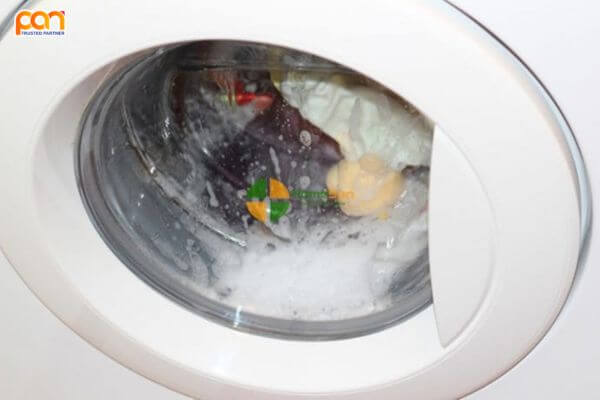
How to Fix a Washing Machine That Keeps Spinning
Before inspecting the machine, disconnect the power supply and water supply when necessary to ensure safety. For faults involving electrical components, the control board, motor or internal parts, users should contact a qualified technician instead of attempting repairs without the necessary expertise.
Check the Door Switch
Inspect the door lock, door switch and related wiring. Make sure the door closes securely, there are no obstructions around the locking mechanism and there are no visible signs of loose connections or damage.
If the door switch is unstable, replace it with the correct component for the washing machine model. Do not bypass the door-locking or safety system.
Inspect the Water-Level Sensor
Check the water-level sensor, sensor hose and related connections. If the sensor is dirty, clean it properly. If it is damaged, replace it with a compatible component for the equipment model.
Electrical testing and sensor replacement should be performed by a qualified technician to avoid damaging other components.
Inspect the Motor and Drive Belt
Check whether the drive belt is loose, worn or broken. Also inspect the motor for signs of overheating, unusual noise or unstable operation.
If a component is damaged, it should be replaced with the correct type and specifications. After repairs, test the machine's rotation and complete operating cycle.
Check the Water Supply System
Make sure the water pressure is appropriate, the inlet valve operates normally and the inlet filter is free from debris. Check that the water supply hose is not kinked or compressed.
If the inlet valve is faulty, replace it with a suitable component rather than continuing to operate the machine for an extended period.
Inspect and Clean the Drainage System
Check the drain hose, filter, drain pump and water drainage paths. Remove debris or objects causing blockages. If the drain pump or related components are damaged, repair or replace them according to the equipment specifications.
After inspection, run a short washing program to determine whether the machine can drain water and move through the cycle normally.
Check the Control Board and Washing Program
If the basic components operate normally but the machine continues spinning, the problem may be related to the control board or software. This requires a more detailed technical inspection.
Do not remove the control board or replace electronic components without accurately identifying the cause, as this may create additional faults or electrical safety risks.

How to Prevent Continuous Spinning Problems
Proper use and regular maintenance can help reduce operating faults. The following measures should be carried out regularly.
Use the Machine Within Its Rated Capacity
Do not overload the machine beyond the recommended laundry capacity. Excessive loads may increase stress on the motor, drive belt and transmission system while also affecting drum balance.
If the laundry volume is large, divide it into smaller loads suitable for the equipment capacity.
Clean the Drum and Chemical Compartments
Clean the washing drum, detergent or chemical compartments and areas where residue may accumulate. This helps reduce deposits that can affect water supply, drainage and overall equipment operation.
Inspect the Water Supply and Drainage Systems
Regularly inspect the water inlet valve, filter, supply hose, drain hose and drain pump. Early detection of leaks, blockages or component damage helps reduce the risk of cycle interruptions.
Inspect the Motor, Drive Belt and Transmission Components
For machines using drive belts, check belt tension and wear regularly. The motor should also be inspected when unusual noises, abnormal heat or unstable operation occurs.
Perform Scheduled Maintenance
Regular maintenance helps identify early problems involving sensors, door locks, drainage systems, motors and control boards. For industrial washing machines, the maintenance schedule should match operating frequency and laundry processing volume.
Contact a Qualified Technician When Necessary
If the machine continues spinning, fails to advance through cycles, produces unusual noises or shows signs of overheating, stop operation and request a technical inspection. Prompt troubleshooting can help prevent further damage and reduce unplanned downtime.
What Should Be Checked When an Industrial Washing Machine Spins Continuously?
For industrial washing machines, continuous spinning should be handled carefully because it may directly affect laundry productivity and business operating schedules.
- Inspect the control program and related sensors.
- Check the water supply, drainage system and control valves.
- Inspect the motor, drive belt or transmission system according to the machine configuration.
- Check the door lock and safety mechanisms during operation.
- Inspect the control board, electrical connections and power supply.
- Perform scheduled maintenance to reduce unplanned downtime.
Conclusion
A washing machine that keeps spinning continuously may be caused by a faulty door switch, water-level sensor, water inlet valve, drainage system, motor, drive belt, control board or washing program. Identifying the correct cause helps ensure effective repairs and reduces the risk of affecting other components.
Users should follow safety procedures when inspecting equipment, perform regular maintenance and contact qualified technicians when electrical or internal component faults occur. For businesses using industrial washing machines, PAN can support equipment consultation and industrial laundry solutions based on actual operational requirements.
Contact Information
PAN TRADING JSC
📞 Hotline: (+84) 28 3840 2222 | 0919 302 879
📍 Address: 142 B2 Street, Sala Urban Area, An Khanh Ward, Ho Chi Minh City, Vietnam
📧 Email: contact@pantrading.vn
🌐 Website: pantrading.vn | thietbigiatcongnghiep.com