In hospitals and healthcare facilities, protecting patients, healthcare workers, and the community is a key operational priority. Therefore, the laundering and management of medical textiles involve more than routine cleaning. They are also connected with hygiene, infection control, and the overall operation of the healthcare facility.
An organized textile-management system should control the process from collection, sorting, and transportation through washing, drying, finishing, packaging, storage, and distribution of clean textiles. A structured process can help reduce the risk of cross-contamination and maintain textile quality during use.
1. What Are Medical Textiles?
Medical textiles can include bed sheets, blankets, pillowcases, lab coats, table linen, towels, patient clothing, and other textile items used in patient care and healthcare operations.
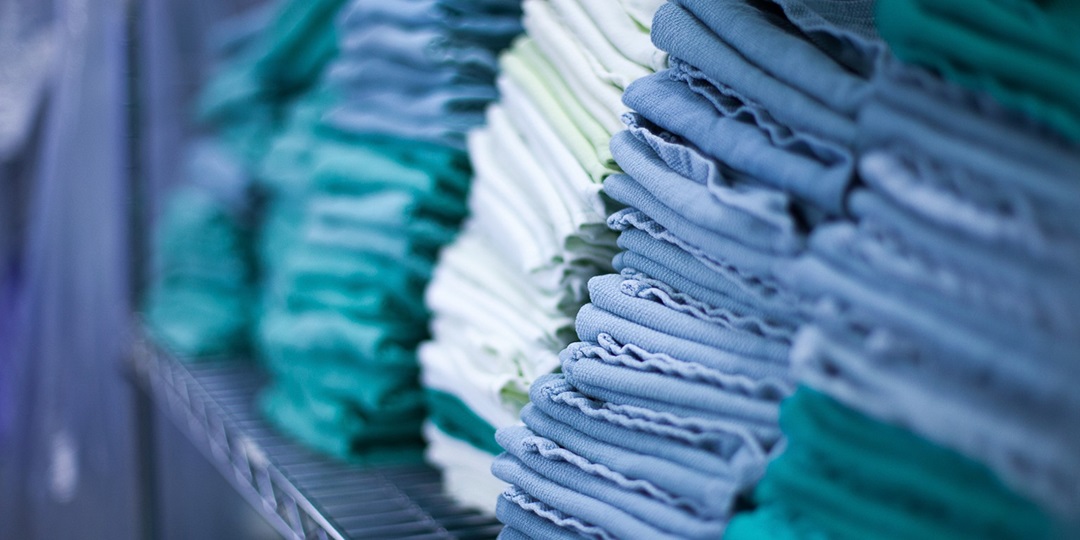
Medical textiles can be divided into several main groups:
- General textiles: textiles generated from regular patient rooms that are not associated with infectious diseases and are not contaminated with blood, body fluids, or biological waste.
- Soiled or contaminated textiles: textiles from infectious areas or items contaminated with blood, body fluids, biological waste, surgical areas, or other potentially high-risk sources.
2. Why Is Medical Textile Management Important?
Reducing the Risk of Cross-Contamination
Hospitals accommodate patients with different medical conditions. If soiled textiles are not collected, sorted, and processed appropriately, they may become a source of contamination during healthcare operations.
Infection-control practices include appropriate textile processing and washing, while minimizing unnecessary disturbance during collection and transportation to reduce the spread of contaminants.
Protecting Patients, Healthcare Workers, and the Community
Textiles used in healthcare environments may contain different types of microorganisms. The source material refers to microorganisms such as MRSA and VRE that can remain on textiles for a period of time. Proper management of soiled and clean textiles is therefore an important part of an organized laundry process.
In particular, handling contaminated textiles with minimal unnecessary disturbance can help reduce the potential spread of contaminants to air, surfaces, and people.
Supporting Hospital Service Quality
Proper management and processing of medical textiles help maintain clean, organized textiles for patients and healthcare activities. This is also part of maintaining service quality and the care environment within a hospital.
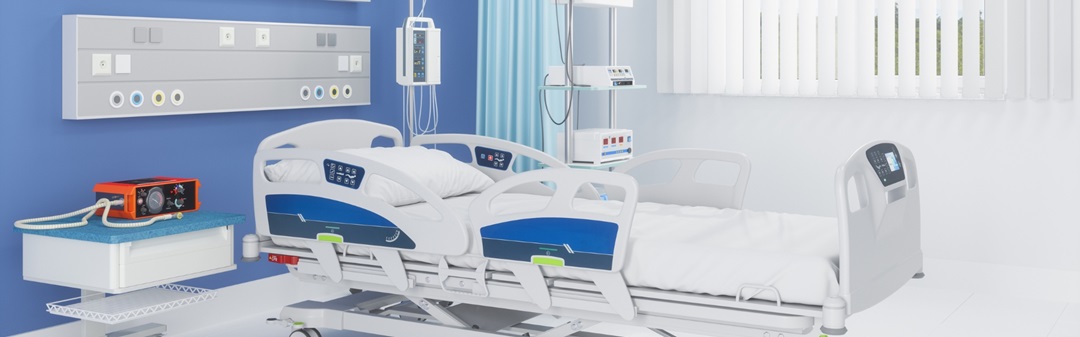
3. Important Considerations for Medical Textile Management
- Do not use textiles that are torn, excessively worn, or no longer suitable for use.
- Do not attach needles or sharp objects to textiles.
- Check textiles before collection to prevent personal belongings or other items from being left inside.
- Do not shake soiled textiles over beds.
- Use appropriate personal protective equipment when collecting textiles contaminated with blood, body fluids, or textiles from isolation rooms.
- Do not hold clean or soiled textiles directly against uniforms.
- Do not place soiled textiles directly on the floor.
- Do not store clean textiles in locations where they may become contaminated.
- Keep clean textiles in designated clean textile storage areas until use.
- Package clean textiles appropriately and use clean transportation equipment.
- Textiles used for surgery and procedures should be packaged and processed according to the healthcare facility's infection-control requirements.
4. Medical Textile Processing and Management Workflow in Hospitals
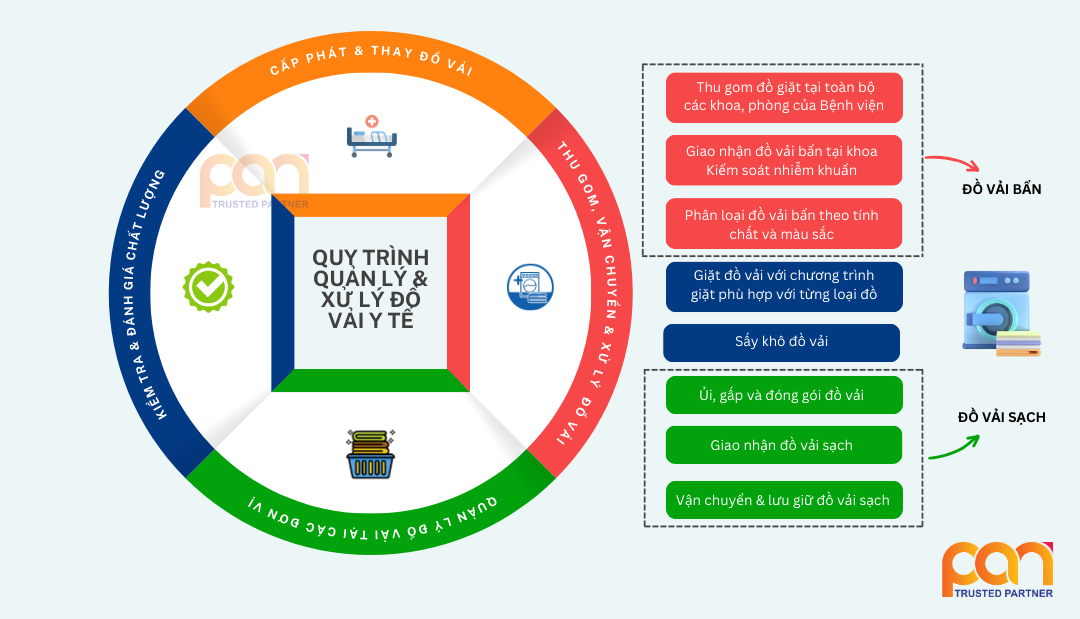
Step 1: Collect Textiles from Hospital Departments
Textiles are collected from hospital departments and rooms. According to the source material, textiles from isolation rooms should be collected in separate bags, securely closed, and labeled with the quantity, type, and source of the textiles.
Soiled textiles are transported to the infection-control area using dedicated or appropriate transportation equipment such as carts or other designated vehicles.
Step 2: Receive and Record Textiles
The laundry team counts and checks the quantity and type of textiles received and records the handover according to the hospital's established process.
Step 3: Transport to the Laundry and Sort
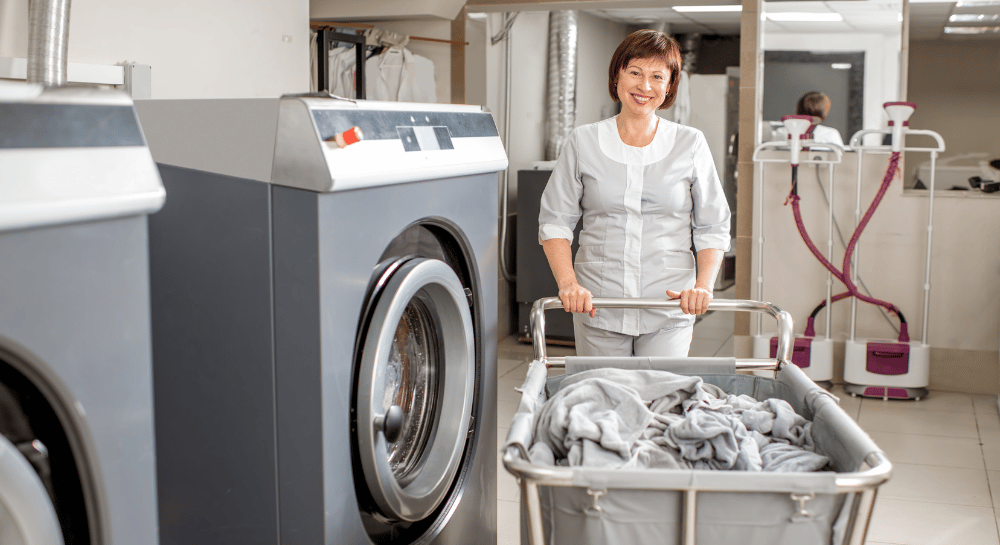
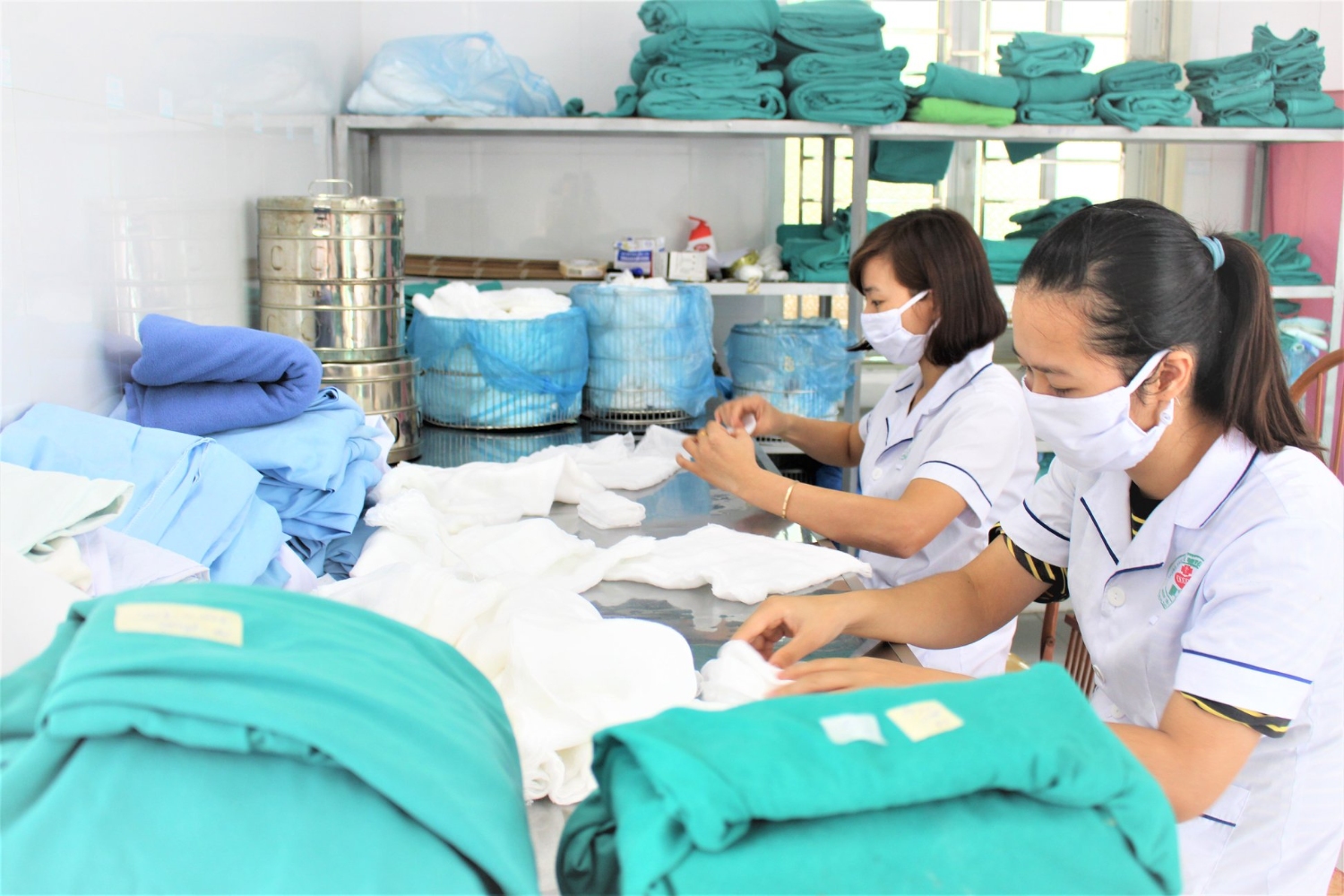
Textiles are transported to the laundry area using suitable dedicated equipment and placed in a designated holding area. They are then sorted and weighed according to category.
- General textiles used by staff.
- Patient clothing, blankets, bed sheets, and pillowcases from regular patient rooms.
- Textiles contaminated with blood, body fluids, or originating from infectious areas.
- Surgical textiles.
- Colored textiles.
- Other textile categories.
During sorting, items such as pens, cotton, gauze, and other foreign objects should be removed. Appropriate personal protective equipment should be used when handling soiled textiles.
Textiles may be pre-treated with appropriate chemicals before washing according to the textile type and the facility's established process.
Step 4: Wash Medical Textiles with Industrial Washing Machines
After sorting, each textile group is processed using a wash program appropriate for its characteristics. Items with heavy stains or contamination from blood or body fluids may require suitable spot treatment before the main wash.
Important washing considerations include:
- Do not exceed the washing machine's rated capacity.
- Select an appropriate wash program for each textile group.
- Use the appropriate chemical dosage for each prepared laundry load.
According to the source material, the washing process may include pre-wash, main wash, rinsing, neutralization, and extraction stages.
The chemical groups mentioned include spot-treatment chemicals for blood, body fluids, sweat, and grease; alkaline chemicals; main detergents; bleaching agents; neutralizers; and fabric softeners and fragrances.
Step 5: Drying
After washing, the textiles are transferred to an industrial dryer. Drying and cooling times should be selected according to the textile type so that the textiles are adequately dry before the next processing stage.
Step 6: Finishing, Folding, and Packaging
After drying, textiles are finished, folded, and packaged separately according to their category, type, and required quantity.
Step 7: Storage and Distribution of Clean Textiles
Clean textiles are received and stored according to the hospital's control procedures. Storage areas should be clean, dry, and organized to reduce the risk of contamination.
- Use dedicated equipment for transporting clean textiles.
- Cover or appropriately package textiles during transportation.
- Sort and store textiles by category to facilitate distribution.
Step 8: Textile Management in Storage and User Departments
Management should track issued textiles, reserve quantities, textiles currently in use, and the requirements of individual departments. Healthcare facilities can also plan and forecast additional textile types required for patient care and treatment activities.
5. Why Use Industrial Washing Machines and Dryers in Hospital Laundries?
Industrial washing machines and dryers are designed to process large volumes of textiles at a high operating frequency. These characteristics make them suitable for hospital and healthcare laundry operations.
Processing Large Volumes of Textiles
Industrial washing machines are available in different capacities, with some models capable of processing hundreds of kilograms per load. Selecting the appropriate capacity according to the facility's daily laundry volume can help organize the laundry workflow more efficiently.
Multiple Wash Programs
Industrial washing machines can be configured with different wash programs for textile groups such as bed sheets, towels, patient clothing, and healthcare staff uniforms.
Supporting Consistent Laundry Processing
Combining textile sorting with appropriate wash programs, professional laundry chemicals, and properly sized equipment allows hospital laundries to organize textile processing more consistently.
Saving Time and Labor
The ability to process large quantities of textiles per load can reduce turnaround time and support more efficient allocation of staff to other activities within the healthcare facility.
PAN's Hospital Laundry Design and Equipment Consultation
PAN provides consultation on industrial laundry facility design and laundry equipment selection for facilities with specialized textile-processing requirements. Equipment selection for each project should consider textile volume, textile categories, available space, workflow, and the facility's infection-control requirements.
PAN can support site surveys, laundry design consultation, equipment selection, technology transfer, and operator training to help develop a laundry workflow suited to the facility's actual requirements.
Laundry facility design should address objectives such as maintaining textile quality, reducing the risk of cross-contamination, organizing appropriate soiled-to-clean textile flows, and supporting efficient operation.
Contact Information
PAN TRADING JSC
📞 Hotline: (+84) 28 3840 2222 | 0919 302 879
📍 Address: 142 B2 Street, Sala Urban Area, An Khanh Ward, Ho Chi Minh City, Vietnam
📧 Email: contact@pantrading.vn
🌐 Website: pantrading.vn | thietbigiatcongnghiep.com