As demand for professional textile care continues to grow, hotels, hospitals, factories, restaurants, and commercial laundry facilities need equipment capable of processing large volumes of textiles efficiently. Industrial laundry addresses this need through high-capacity washing and drying equipment designed for professional laundry operations.
So, what is industrial laundry? What are its advantages and limitations, and where is it commonly used? This article provides an overview of industrial laundry processes and applications.
Introduction to Industrial Laundry
What Is Industrial Laundry?
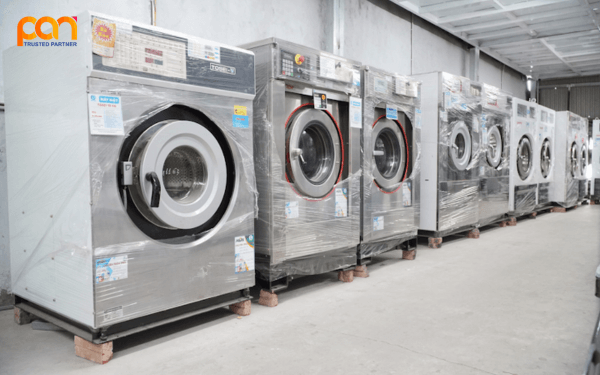
Industrial laundry is the process of washing and drying large quantities of clothing, textiles, and other fabric products using high-capacity industrial washing machines and dryers. It is commonly applied in hotels, hospitals, factories, schools, and professional commercial laundry facilities.
The objective is to process large textile volumes efficiently while controlling factors such as washing programs, temperature, chemicals, processing time, and drying conditions according to the requirements of each textile type.
Characteristics of Industrial Laundry
- High capacity: Industrial washing machines and dryers are available in different capacities for facilities processing large textile volumes.
- High processing speed: Industrial equipment is designed to reduce washing, extraction, and drying time.
- Durable construction: Industrial equipment generally uses robust construction and materials suitable for frequent operation.
- Multiple programs: Programs can be selected and adjusted according to textile type, load size, and soil level.
- Water and energy optimization: Some modern machines are designed to control water and energy consumption during operation.
The Role of Industrial Laundry
Industrial laundry plays an important role in industries that regularly process large volumes of textiles. A well-organized laundry process helps businesses manage processing time, labor, and textile quality more effectively.

Supporting Hygiene
- Cleaning support: Washing programs and professional laundry chemicals can be selected according to textile type and processing requirements.
- Suitable for healthcare environments: Healthcare facilities can establish textile-processing procedures according to their specific hygiene requirements.
Improving Operational Efficiency
- Saving time and labor: Industrial equipment can process larger loads per cycle, reducing manual handling.
- Increasing productivity: A higher level of process automation can help laundry facilities organize operations more efficiently.
Supporting Efficient Resource Use
- Water and energy control: Modern equipment can be configured according to the selected program and textile load.
- Appropriate chemical use: Selecting and dosing chemicals according to the process helps control textile treatment performance.
Supporting Service Quality
- Consistent textile processing: Programs designed for specific textile groups can improve process consistency.
- Professional operations: An appropriate industrial laundry system supports a more structured and professional workflow.
Advantages and Disadvantages of Industrial Laundry
Advantages
- High productivity: Industrial washing machines and dryers have high capacities and are suitable for facilities processing large textile volumes.
- Reduced processing time and labor: Automation across multiple stages can reduce manual work and processing time.
- Washing quality control: Programs can be adjusted according to textile type, soil level, temperature, time, and processing requirements.
- Durable construction: Industrial equipment is designed for frequent operation and high processing volumes.
- Water and energy management: Some machines incorporate features designed to optimize water and energy use.
- Professional operation: A suitable industrial laundry system can help businesses organize textile processing more systematically.
Disadvantages
- Higher initial investment: Industrial equipment generally requires a higher initial investment than household washing and drying machines.
- Installation requirements: Large machines require suitable space, power supply, water supply, drainage, and other technical conditions.
- Less suitable for small textile volumes: Using high-capacity equipment for small loads may result in inefficient equipment utilization.
- Regular maintenance required: Frequently operated equipment needs regular cleaning, inspection, and maintenance according to manufacturer recommendations.
- Suitable laundry chemicals required: Some systems require detergents, treatment chemicals, and softeners compatible with the equipment and laundry process.
- Potential noise and vibration: Incorrect installation or an unsuitable location can affect the working environment.
- Trained operators required: Operators need appropriate training in washing programs, chemicals, load capacity, and relevant safety procedures.
Steps in an Industrial Laundry Process
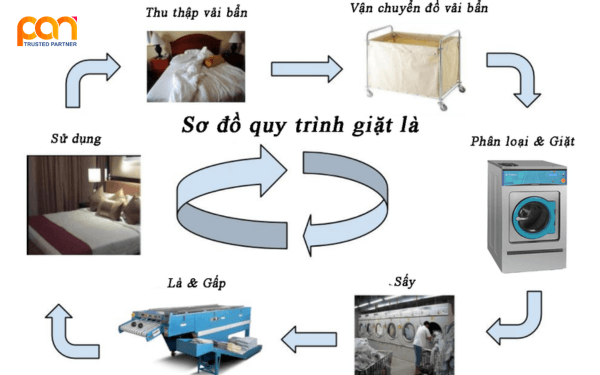
The industrial laundry process can be adjusted according to textile type and facility requirements. A basic process may include the following steps:
Step 1: Sort and Inspect Textiles
- Sort textiles according to material, color, and soil level.
- Check pockets, zippers, metal objects, and other items that may affect the machine or textiles.
- Inspect textiles for areas that require pre-treatment.
Step 2: Pre-Treatment
- Pre-wash or soaking: Used when textiles contain heavy soil or difficult stains.
- Spot treatment: Apply suitable treatment products to concentrated stains such as grease, oil, or discoloration before the main wash.
Step 3: Main Wash
- Select the washing program according to textile type, load size, and soil level.
- Dose detergent, treatment chemicals, and softener according to the requirements of each load.
- Run the machine according to the selected program.
Step 4: Rinsing and Extraction
- Rinsing: Use rinse cycles to remove remaining detergent and chemicals from the textiles.
- Extraction: Use an appropriate spin speed to remove excess water before drying.
Step 5: Drying
- Select an appropriate drying level and time for each textile type.
- Control temperature and drying time to reduce the risk of shrinkage or textile damage.
Step 6: Cooling
After drying, some textiles require a cooling stage before finishing. The cooling time and method depend on the textile type and the facility's process.
Step 7: Pressing and Finishing
- Pressing: Use suitable industrial ironing or pressing equipment to finish textiles.
- Finishing: Inspect the textiles, remove remaining contaminants, and prepare them for packaging.
Step 8: Packaging and Storage
- Fold or hang textiles according to the requirements of each product.
- Package appropriately and store in a clean, dry, and well-ventilated area.
Step 9: Final Inspection and Delivery
- Carry out a final inspection of cleanliness, textile condition, and finishing requirements.
- Deliver the processed textiles to customers or the relevant department according to schedule.
Applications of Industrial Laundry
- Hotels and resorts: Processing bed linen, towels, table linen, curtains, and other hospitality textiles.
- Hospitals and healthcare facilities: Processing clothing, bed linen, and other textiles according to facility hygiene requirements.
- Factories and industrial facilities: Washing uniforms, workwear, and protective clothing.
- Professional laundry facilities: Providing textile processing services for individuals, businesses, and organizations.
Where to Buy Industrial Laundry Equipment?
When investing in industrial laundry equipment, businesses should consider textile volume, textile types, operating frequency, installation space, water supply and drainage, power requirements, and the requirements of the complete laundry process.
PAN TRADING JSC provides industrial laundry equipment solutions and supports businesses in selecting equipment according to their actual textile-processing requirements.
Conclusion
Industrial laundry is a textile-processing process that uses high-capacity equipment and is suitable for facilities handling large and frequent laundry volumes. It can improve processing capacity and automate multiple stages of the laundry workflow, while also requiring businesses to consider investment costs, installation conditions, maintenance, and operator training.
Selecting equipment according to the actual textile volume and laundry workflow is an important factor in achieving effective industrial laundry operations.
Contact Information
PAN TRADING JSC
📞 Hotline: (+84) 28 3840 2222 | 0919 302 879
📍 Address: 142 B2 Street, Sala Urban Area, An Khanh Ward, Ho Chi Minh City, Vietnam
📧 Email: contact@pantrading.vn
🌐 Website: pantrading.vn | thietbigiatcongnghiep.com