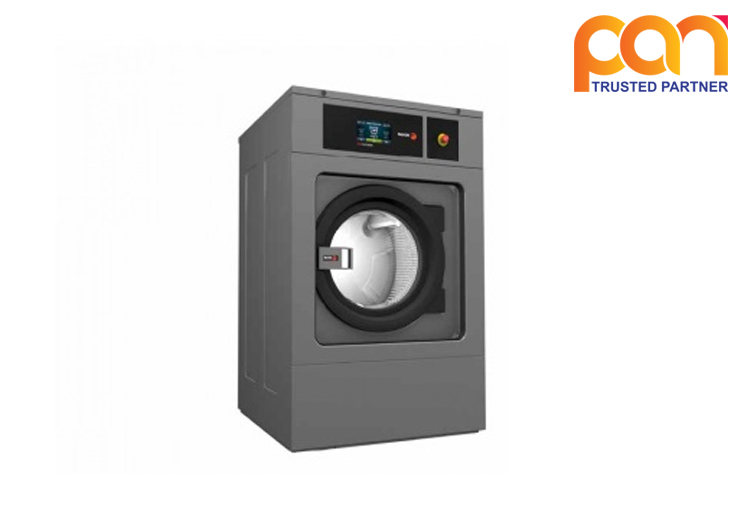
Fagor Professional industrial washing machine
In industrial laundry operations, water, electricity and chemicals are key factors that directly affect operating costs. As laundry volumes increase, controlling each washing cycle becomes increasingly important for maintaining stable performance and using resources efficiently.
This is why technologies that support data management, program optimization, water reuse and automatic load sensing are becoming increasingly relevant in modern laundry operations.
1. Fagor Konnect – A Smart Management Platform
Fagor Konnect is a connectivity and management platform introduced on new-generation industrial washing machines from Fagor Professional.
Rather than simply controlling individual washing cycles, the system is designed to provide data and tools that help businesses monitor, program and manage laundry operations.
What Does Fagor Konnect Support?
- Real-time monitoring of operating parameters.
- Programming and optimization of washing cycles.
- Control of water, electricity and chemical consumption.
- Standardization of washing processes across the system.
This allows operational data to become a basis for monitoring performance and identifying areas that may require adjustment.
Fagor Konnect goes beyond machine control by supporting performance management throughout the washing process.
2. Water Reuse Tank System – Optimizing Water Consumption
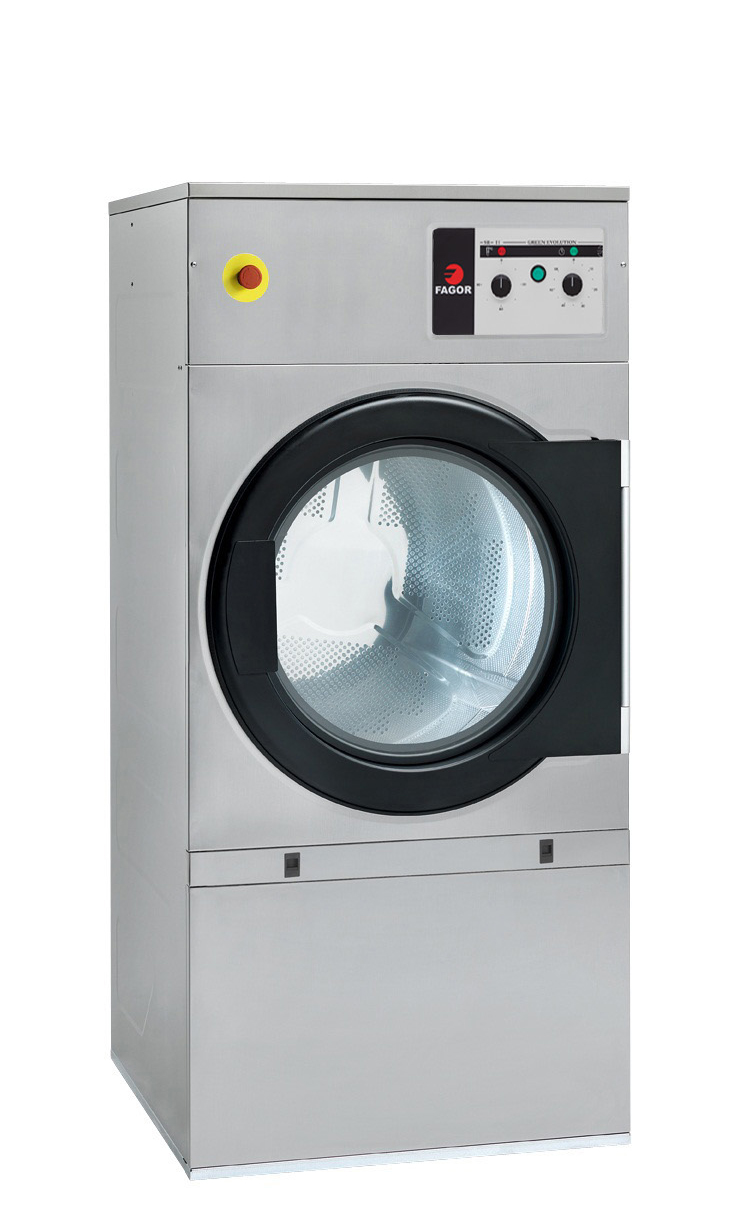
Industrial dryer in a professional laundry system
Another solution introduced within the system is a water reuse tank system. Instead of using completely fresh water for every stage, suitable water from selected stages can be stored and reused according to the system design.
How It Works
- Water from a final rinse cycle or other suitable source is stored in a dedicated tank.
- The stored water can be reused for selected stages of a subsequent cycle, such as pre-washing or initial rinsing.
- Fresh water demand can therefore be reduced according to the system design and operating program.
Operational Benefits
- Helps reduce water consumption.
- Supports operating cost control.
- Reduces the amount of water entering wastewater treatment systems.
- Can be considered for high-volume operations such as hotels, hospitals and industrial laundries.
For laundries processing hundreds or thousands of kilograms of linen each day, optimizing water consumption in individual cycles can become increasingly meaningful when measured across the total number of cycles over the long term.
3. Automatic Load Sensing – Adjusting Programs to Actual Loads
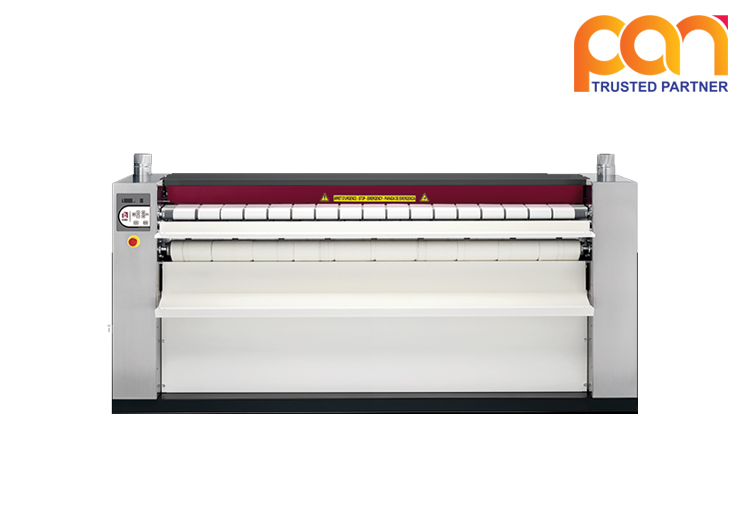
Fagor PS-50/330 industrial ironer
Another factor affecting operational efficiency is the actual textile load in each washing cycle. If programs are based on a fixed load while the actual laundry volume varies, water, time and energy consumption may not correspond to the actual load.
Automatic load sensing is designed to identify the actual textile weight and support program adjustments according to the detected load.
How It Works
- Identifies the actual textile weight at the beginning of the cycle.
- Determines operating parameters according to the detected load.
- Adjusts water volume and cycle time according to the program.
- Helps prevent unsuitable operation when loads are too small or too large.
Practical Operating Value
- Can help reduce processing time for appropriate smaller loads.
- Helps limit unnecessary water and energy consumption.
- Supports more consistent washing operations.
- Reduces unsuitable operation based on inaccurate load assumptions.
This represents a shift from primarily manual machine operation toward a more data-based approach to laundry management.
4. Combining Technologies Within One Laundry System
The value of technology does not come only from individual features. When different technologies are combined, laundries can develop a process with greater control from input to output.
Three key elements include:
- Fagor Konnect: supports connectivity, programming and operational data management.
- Water reuse tank: helps optimize water use within selected cycles.
- Automatic load sensing: supports adjustments based on actual textile weight.
When implemented appropriately, these technologies can help businesses:
- Improve control over operating costs.
- Reduce unnecessary resource consumption.
- Standardize washing processes.
- Improve consistency between cycles.
- Gain additional data for evaluating equipment performance.
- Improve long-term investment efficiency.
5. From Machine Operation to Laundry Performance Management
In an industrial laundry, a single cycle may not create a significant difference in operating cost. However, when equipment runs dozens or hundreds of cycles every day, small differences in water, electricity, time and chemicals can accumulate into meaningful operating costs.
This is why performance management should be considered across the entire process rather than focusing on a single machine parameter.
A modern laundry system can be evaluated through multiple factors:
- Daily textile processing volume.
- Water consumption per cycle.
- Energy consumption.
- Processing time per load.
- Chemical consumption.
- Consistency of washing quality.
- Equipment operating and maintenance data.
When these data points are monitored and analyzed, businesses have a stronger basis for identifying optimization opportunities and making appropriate equipment investment decisions.
6. Which Laundry Operations Can Benefit from Fagor Konnect?
Smart management and operational optimization technologies are particularly relevant to facilities handling large textile volumes and high numbers of washing cycles each day.
- Hotels and resorts.
- Hospitals and healthcare facilities.
- Industrial laundries.
- Commercial laundry services.
- Operations that need standardized washing processes across multiple machines.
Depending on the facility size, textile types, laundry capacity and operating requirements, businesses can select an appropriate equipment configuration and level of automation.
7. Technology Creates Value When It Is Implemented Correctly
A smart control system does not automatically deliver efficiency if washing programs, load levels, chemicals, temperatures and operating procedures are not properly configured.
When investing in equipment, businesses should therefore consider:
- Required laundry volume.
- Textile types and soil levels.
- Equipment capacity.
- Water supply and drainage systems.
- Electricity or heating requirements.
- Chemical dosing systems.
- Laundry layout and available space.
- Equipment operation and maintenance requirements.
Selecting the right configuration from the beginning helps businesses make better use of available technology while avoiding investment beyond actual operational needs.
Conclusion
Fagor Konnect reflects the shift from basic washing machine control toward data-driven and connected laundry process management.
When combined with a water reuse tank system and automatic load sensing, businesses gain additional tools for controlling water, energy, time and operational performance.
In an industrial laundry, efficiency does not come from a single cycle. Its value lies in maintaining optimized performance across thousands of cycles throughout the equipment's operating life.
For businesses developing or upgrading an industrial laundry system, evaluating technology together with capacity, layout, workflow and actual operational requirements can help determine a more suitable equipment configuration.
Contact PAN for Consultation
If your business is looking for industrial washing machines or needs advice on selecting equipment suitable for its laundry operation, PAN can support you from equipment selection to industrial laundry solution planning.
Contact PAN for consultation on industrial laundry equipment and solutions.
Contact Information
PAN TRADING JSC
📍 142 B2 Street, Sala Urban Area, An Khanh Ward, Ho Chi Minh City, Vietnam
📞 (+84) 28 3840 2222 - 0919 302 879
🌐 pantrading.vn | thietbigiatcongnghiep.com
📩 contact@pantrading.vn